

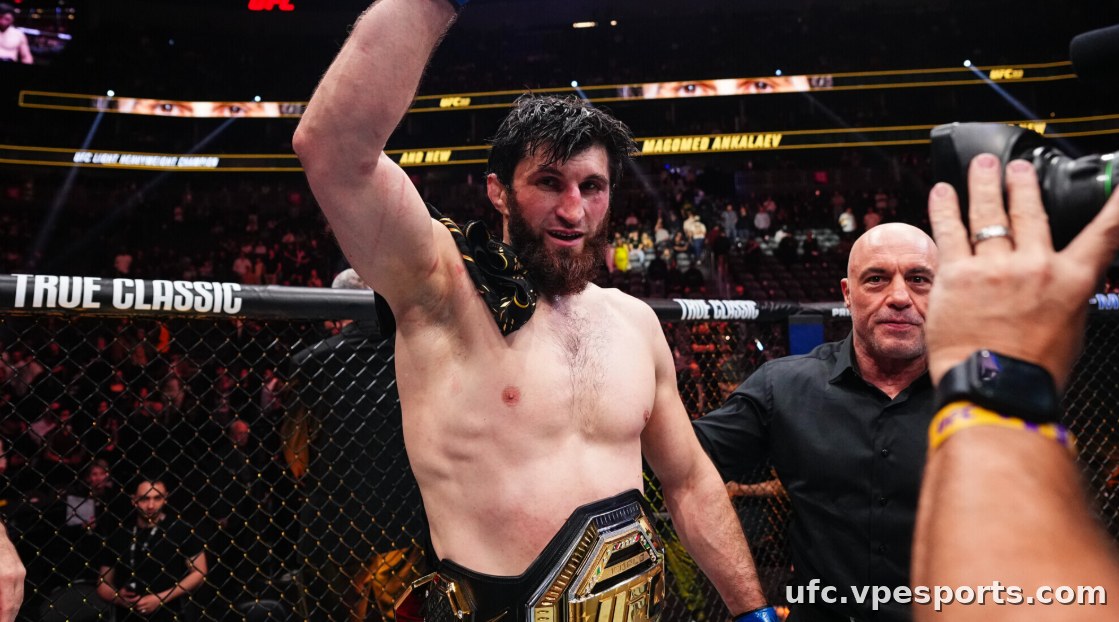
Magomed Ankalaev’s career has never been built around noise first. That is part of what makes it interesting. In a sport full of men who try to force attention before they force results, Ankalaev came through the opposite way. He built himself in the quiet. He came out of Dagestan with the kind of background that usually produces hard, serious fighters rather than polished stars. Combat sambo gave him his first deep shape as an athlete, but even that does not fully explain why he became such a difficult problem later. What turned him into a real contender was the way all the pieces started fitting together. He had the balance of a striker who trusts his feet, the discipline of a fighter raised through wrestling-heavy systems, and the patience of someone who does not mind winning rounds without begging people to love the process.
That kind of career rarely explodes all at once. It hardens. It takes shape in layers. Ankalaev did not enter the UFC with the warm glamour that follows a man promoted as a future pay-per-view headliner. He came in with danger around him, but not mythology. He still had to prove it. He still had to show that the things people respected on the regional scene would hold together against a much deeper level of opposition. That part of the story matters because some of the best fighters of the last decade did not rise through charisma and easy headlines. They rose because, once the cage door closed, they kept making the person across from them feel smaller than expected.
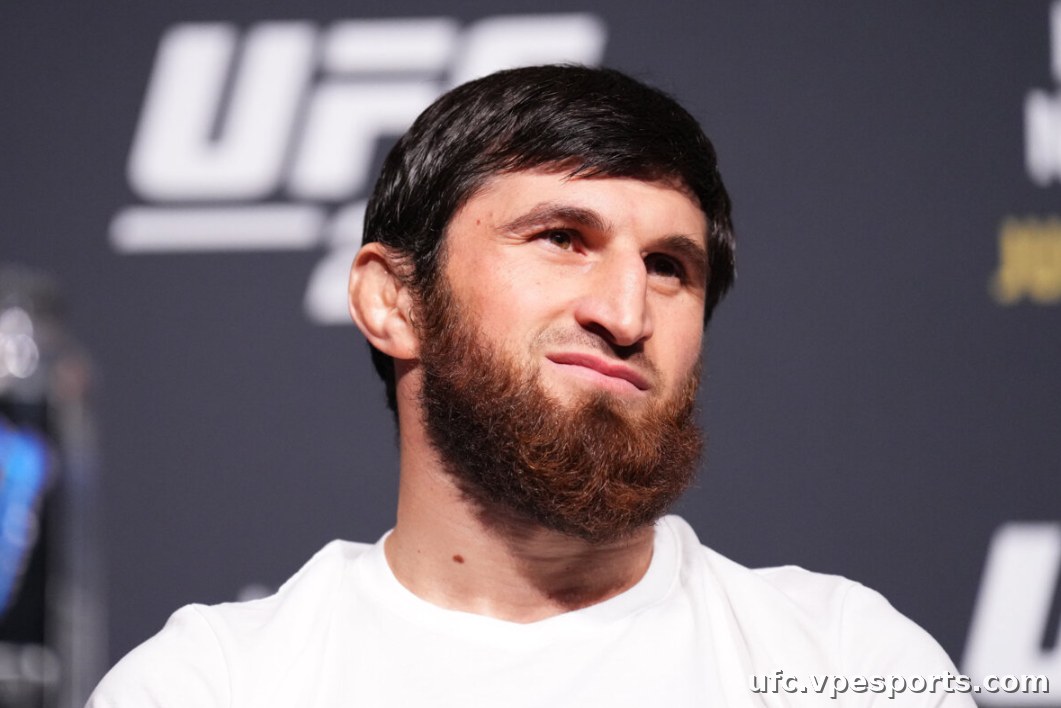
His life before the biggest lights already pointed that way. Dagestan does not produce soft professionals. Fighters from that world usually arrive with a familiar foundation: discipline, a hard relationship with training, and no romantic view of what the sport is supposed to give back. The work is the work. The rounds are the rounds. You break a man down or you get broken down yourself. Ankalaev carries that energy in a very particular way. He is not wild. He is not one of those pressure fighters who need visible chaos to impose themselves. He is much colder than that. He is a technician shaped by a harsh system, and that combination can make him look almost too calm while the damage is building.
Even early, you could see why people inside the sport took him seriously. He was not only dangerous because he could wrestle. That stereotype never fit him neatly enough. He hit cleanly. He had real body kicks, straight lefts, and the kind of timing that lets a fighter punish one mistake without wasting three movements getting there. He looked composed in open space. That is important. A lot of fighters from strong grappling backgrounds become dangerous strikers by necessity. Ankalaev looked like a man who actually understood the striking before he had to lean on the wrestling.
Then came the UFC debut, and with it one of the cruelest lessons the sport gives to serious prospects. He fought Paul Craig and was seconds away from winning a decision. Then Craig caught the triangle in the final second and forced the tap. It was the worst possible kind of first impression for a fighter built on control. Not a clean knockout loss you can explain through one mistake. Not a decision where the better man edged you over three rounds. It was a collapse in the final breath of the fight, the kind of ending that sits on a fighter longer because it feels like a win that escaped through his fingers after almost everything had already been done right.
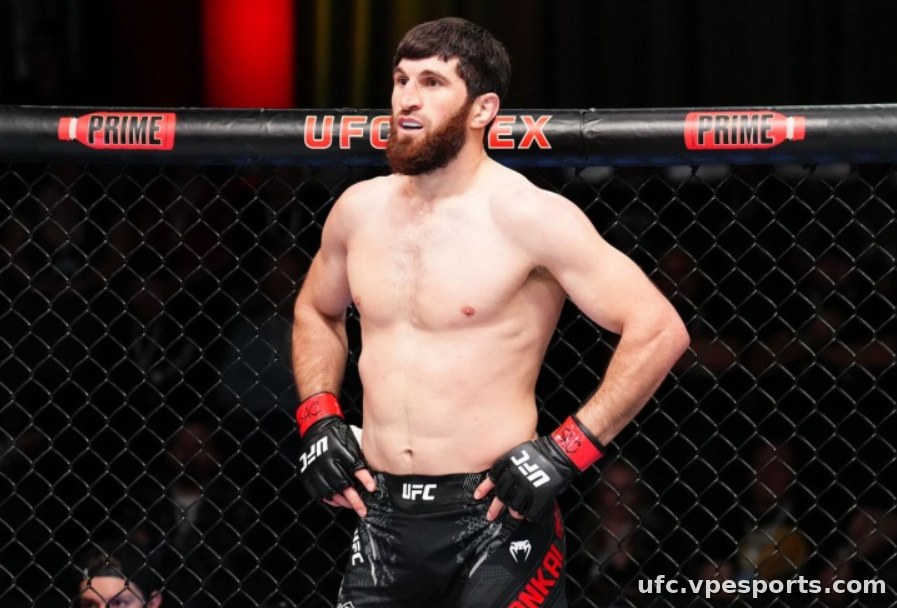
That loss matters more than most debuts because it told you something important about the rest of the career. Plenty of fighters never fully recover from a defeat like that. The first UFC appearance becomes a scar. Every close round later starts carrying the memory of the one that got away. Ankalaev reacted differently. He came back and rebuilt the story through work, which in the end may say more about him than a smooth debut ever could have.
Magomed Ankalaev rise
From there, the climb started to look like the kind of serious contender run that does not always get enough attention while it is happening. Marcin Prachnio, Klidson Abreu, Dalcha Lungiambula, Ion Cutelaba twice, Nikita Krylov, Volkan Oezdemir, Thiago Santos, Anthony Smith. That list matters because it shows the shape of the rise. It was not built on one miracle jump or one carefully protected booking. Ankalaev worked through different kinds of men. Some older. Some explosive. Some ugly to fight. Some physically strong enough to turn a round into a grind. He kept finding ways through them.
The two Ion Cutelaba fights say a lot about the stage of career he was in at that point. The first ending created controversy and noise, which is almost never the cleanest thing for a fighter who is trying to build certainty around his name. So he came back and erased the doubt quickly in the rematch. That is part of his career over and over again. When something hangs in the air too long around him, he usually wants a colder answer the next time.
The Nikita Krylov and Volkan Oezdemir wins were different. They were not built for social-media glamour. They were built for the people who understand how hard it is to keep solving ranked light heavyweights without giving away pieces of yourself in the process. Krylov has always been dangerous because he can drag a fight out of shape. Oezdemir has always had the kind of power that can punish hesitation immediately. Ankalaev beat them both and, more importantly, did it in a way that kept strengthening the same argument around him. He was not a fake contender. He was a man becoming structurally difficult to deny.
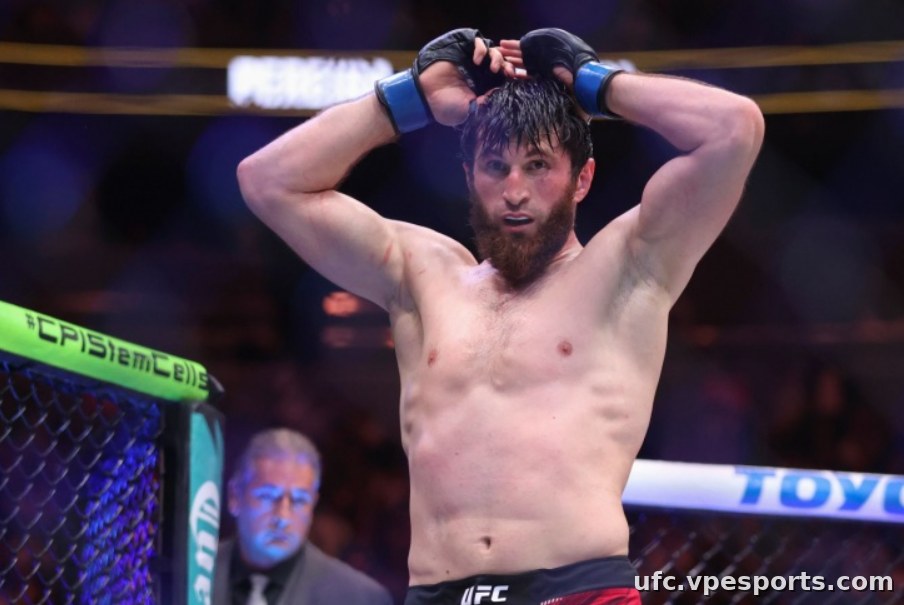
Thiago Santos brought another kind of test. By then Santos was no longer the fresh destroyer who had once come within a round of taking the belt from Jon Jones, but he was still experienced, still dangerous, and still capable of making people doubt themselves. Ankalaev did not give him much to work with. The fight was not a riot. It was a cold, technical, high-control performance, and that too is part of his identity. Fans who want blood all the time can misread a fighter like him. Ankalaev is not trying to entertain before he secures the space. He wins the room first. Then, if the finish comes, it comes on his terms.
The Anthony Smith stoppage mattered because it put a little more violence back into the picture. Smith is one of those veterans who tell you quickly whether a contender has the nerve to impose himself against someone experienced enough to create ugly doubt. Ankalaev got him out of there and pushed harder into the title lane. By then, the light heavyweight division was already having to deal with a familiar question. If this man is not getting the title shot, then who exactly is supposed to be more deserving?
That first championship opportunity came against Jan Błachowicz at UFC 282 for the vacant title. The result was a split draw, and in some ways that outcome fits Ankalaev’s career more than people realize. It was a fight that proved he could belong in a championship atmosphere, but it also left the story unresolved in the most frustrating possible way. He had moments. Jan had moments. Ankalaev came on late. The belt stayed vacant. Nobody got the clean finish to the argument. That is the kind of night that can either harden a contender into something colder or leave him living in grievance. Ankalaev leaned into the first version.
And yet the frustration around him was easy to understand. He had climbed too far and too steadily to leave a title fight with nothing but a draw and a heavier sense of distance. Fighters talk all the time about “learning” from championship setbacks, but not every setback teaches anything useful. Some just leave you with time. Ankalaev had to keep working from that place and trust that the division would eventually circle back.
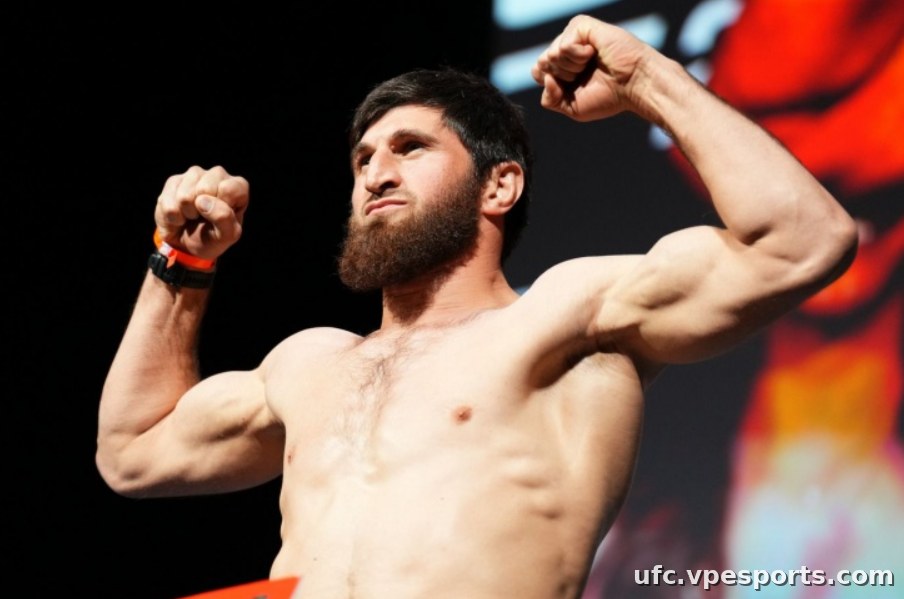
The Johnny Walker sequence made that path even stranger. Their first meeting ended in a no contest after an illegal knee. It was a messy, ugly interruption, the kind that adds one more layer of irritation to a title chase already slowed by a drawn championship fight. Then came the rematch, and Ankalaev cleaned it up. The knockout mattered not only because he beat Walker, but because he did it in a way that removed any need for talk afterward. No judges. No procedural mess. No room for anyone to pretend the rivalry still needed another answer.
By the time he beat Aleksandar Rakic, the division had to treat him as one of its central names whether it liked the style or not. That is another important part of his career. Ankalaev has never depended on universal fan warmth. Some people love the precision. Others want him to open up more, throw more, chase more. But rankings and belts do not move by public affection alone. They move because one man keeps beating the right names at the right level until avoiding him becomes harder than dealing with him.
Ankalaev title fights
That is where the title story around him becomes especially revealing. The first title chance against Jan left him without the belt but not without legitimacy. The later title path brought him into the Alex Pereira era, and that is the type of rivalry that tells you how the division sees a man. Pereira was the bigger star, the cleaner selling point, the knockout magnet with a simpler public aura. Ankalaev was the harder technical question. The colder one. The man who made people ask whether the division’s most explosive champion would still get to fight in his preferred shape once somebody like Ankalaev forced him into long, disciplined, uncomfortable rounds.
Even when the outcomes around those fights split or shifted over time, the meaning stayed the same. Ankalaev had made himself into the type of champion-level fighter who changes how an opponent has to think. That is not a small thing. Plenty of contenders can look dangerous until they reach the top. Very few arrive there and immediately make the beltholder’s path feel narrower. Ankalaev has done that. Whether people enjoy the process or not, he makes elite light heavyweights do more work than they want.
There is also something particularly harsh about the timing of his career. He came through in a post-Jones division that kept changing faces without fully settling for long. That can sound like opportunity, but it also creates its own problems. Every time the division reshapes, a contender has to stay alive through new styles, new stars, and new promotional momentum. Ankalaev has had to navigate title uncertainty, changing champions, strange outcomes and the occasional sense that the division wanted easier headlines than the one he offered. Still, he remained there.
That persistence is one of the strongest things about his career. He is not a one-night fighter. He is not built around one knockout or one lucky title run. He has had to stay near the top through years of different noise and still make the case over and over in the cage. That takes a certain kind of mental hardness. It is easy for a fighter to become bitter when a title path gets delayed, redirected or complicated by outcomes that do not feel fully clean. Ankalaev has had his angry stretches, and not without reason, but he kept doing the work anyway.
| Career point | What it meant |
|---|---|
| Paul Craig loss | Turned a near-perfect debut into a brutal lesson about finishing the fight completely |
| Long UFC unbeaten run | Proved he could recover from disaster and build himself into a real contender |
| Jan Błachowicz draw | Showed he belonged in a title fight but left him without the belt or a clean ending |
| Johnny Walker rematch | Gave him a decisive finish after the no contest and restored momentum |
| Path back to Pereira | Confirmed he was not leaving the championship picture after one frustrating turn |
His style has always played a role in how people discuss him. There are fans who want champions to feel like storms all the time. Ankalaev feels more like pressure that keeps tightening. He does not always chase chaos. He often removes options instead. He kicks the legs, controls the range, threatens the takedown without overcommitting to it, and makes the other man increasingly aware that a wrong guess can tilt the whole fight. That is not always the easiest kind of excellence to love quickly, but it is the kind that ages well in serious analysis.
He also carries a very specific burden that comes with being a high-level fighter from Dagestan in the modern MMA imagination. The label arrives before the fight does. People think they know the script already. Wrestling. Pressure. Control. Grind. Ankalaev has had to live inside that while being a more flexible and complete light heavyweight than the stereotype allows. He can wrestle, yes. He can also strike cleanly enough to hurt elite men and patient enough to let the technical fight come to him. That gap between stereotype and reality has followed him for years. It has probably cost him some appreciation, but it has also made his best performances more satisfying for those who actually watch the details.
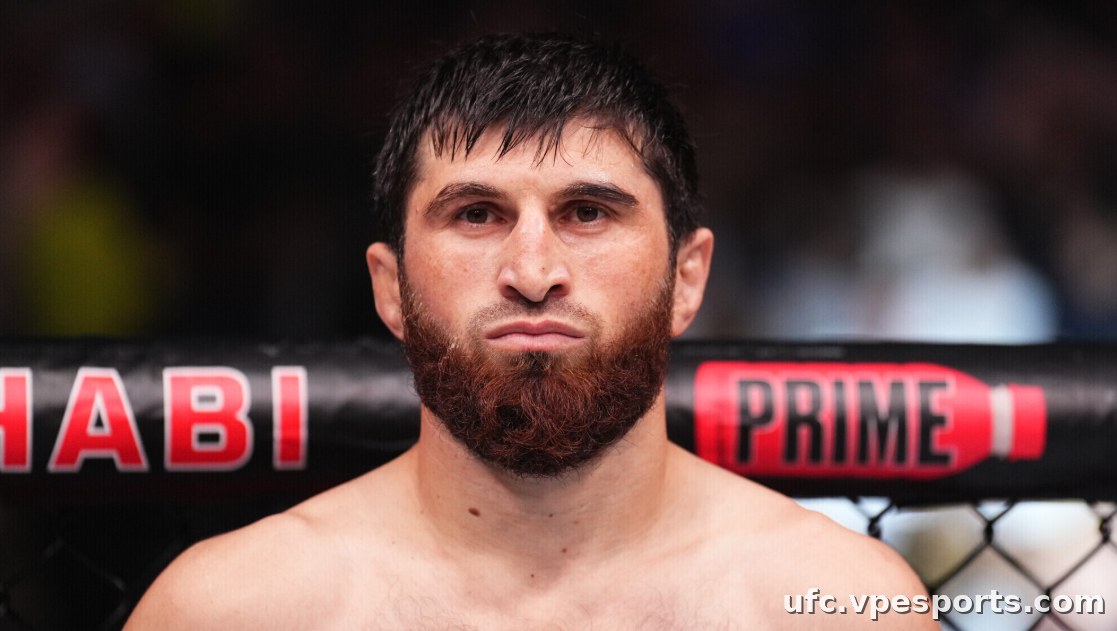
Magomed Ankalaev after the setbacks
The most interesting thing about Ankalaev’s career now is not whether he has been close to the belt. Everyone knows that part already. It is what kind of fighter he has become because of how often the biggest moments refused to resolve neatly for him. The Craig loss. The Jan draw. The Walker no contest. Different forms of frustration, different kinds of unfinished feeling. Careers can go soft under that kind of repetition. Fighters can become less adventurous, more paranoid, too wrapped up in the fairness of the sport to keep moving well inside it. Ankalaev went another way. He became even more controlled, even more insistent on narrowing the fight, even more serious about not letting chaos speak louder than his own structure.
That is why his career deserves more respect than lazy readings often give it. He has not had the easiest path, the loudest promotional push or the cleanest run of defining championship moments. What he has had is something rarer in a way. He has had to survive ambiguity without letting it eat the quality of the work. That is difficult. It asks more from a fighter than just courage in exchanges. It asks for patience with a sport that often refuses to reward the right man in the right order.
- He recovered from one of the cruelest debut losses a contender can have.
- He built his UFC standing through consistency more than spectacle.
- He stayed near the title picture even when huge moments kept ending without a clean payoff.
- He remains one of the hardest style problems the light heavyweight division has had to solve.
There is still something unfinished about the whole story, and that may be the most honest way to leave it for now. Ankalaev’s career is already serious. Already high level. Already full of work that most contenders never match. But it still feels like a career being argued with in the present rather than sealed in the past. That is because the strongest image of him has never been just one knockout or one belt around his waist. It is the image of a man who keeps coming back to the top of the division with the same cold insistence, forcing everyone there to deal with him whether they enjoy the challenge or not.
For a fighter like that, legacy is rarely built in one clean dramatic swing. It is built in attrition. It is built in the fact that the division cannot move freely without his name entering the room sooner or later. Ankalaev has made that true. The belt story may twist again. The next title moment may come cleaner or harsher than the last one. But the career already says enough. He came from a hard system, learned through a brutal opening lesson, and turned himself into one of the defining light heavyweight problems of his era. That is not a small career. That is the kind of career the division has to keep answering until it finally gives him one answer back that feels complete.
Fight Talk
Share your take on this story
Start the Conversation
Be the first to share your take. Discuss the fight, reactions, and predictions with other fans.