


Mackenzie Dern’s career has never felt flat or ordinary. Even before the UFC, there was always something about her story that made people stop for a second. Maybe it was the family she came from. Maybe it was the way she grew up around mats, gyms and long hours of drilling while most kids were still figuring out what sport they even liked. Maybe it was the strange mix in her life from the very beginning. American by birth, deeply tied to Brazil by family and by the fighting culture around her, moving between places, languages and expectations before she was old enough to understand how unusual that all was.
She was born in Phoenix, Arizona, but her life never stayed inside one simple American sports story. Her father, Wellington “Megaton” Dias, was already a huge name in Brazilian jiu-jitsu. That is not a small detail in Mackenzie Dern’s life. It is the center of the early atmosphere around her. She did not grow up near the sport. She grew up inside it. BJJ was in the house, in the travel, in the family conversations, in the rhythm of everyday life. She started training at three years old. For most people, that sounds almost too early to be real. For her, it became normal.
That kind of childhood can help a fighter, but it can also create a very different kind of pressure. When your father is already respected, people watch you differently. They do not only ask if you are talented. They ask if you are worthy of the name. Dern had to live with that from the start. She was not learning in a quiet corner with nobody looking. She was learning in full view of a world that expected something from her very early. And instead of shrinking under that, she became one of the best grapplers in the world.
Her youth was full of travel, competition and a kind of intensity that most future MMA fighters do not reach until much later. She went back and forth between the United States and Brazil. She was around adults in the sport, not only children. She learned how serious competition feels when you are still very young. She saw what high-level dedication looks like up close because it was not just something she admired from a distance. It was right there in her family.
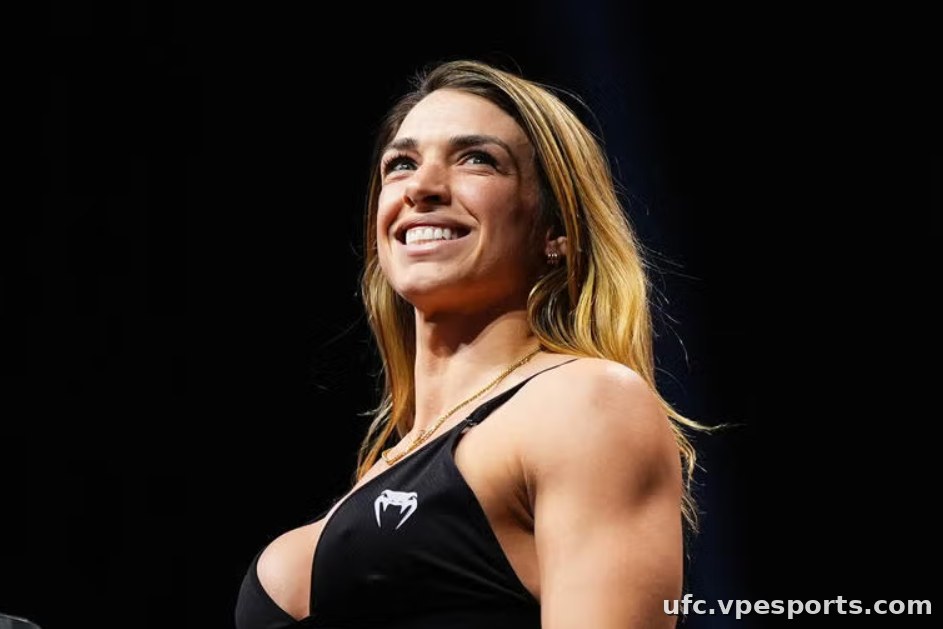
How the Career Began
There are a lot of nice stories people tell about gifted athletes when they are young. With Dern, the most interesting thing is that the talent was real, but the work around it was even more real. She did not become a famous grappler because somebody liked the story of the daughter of Megaton Dias. She became famous because she kept winning. As she moved from one belt level to the next, she became the kind of competitor other women dreaded seeing in the bracket. She won world titles. She won at every belt level. She entered adult divisions when she was still very young and started beating women who were older, stronger and more experienced.
There is one old story that still says a lot about her. At brown belt, she beat a male judo black belt on Japanese television. Even if someone only knows the short version of that, it still tells you something important. Dern grew up in a life where she was constantly being pushed into hard rooms. Not comfortable rooms. Hard rooms. That shapes the mind as much as the technique.
By the time she became a black belt, she was no longer just “very talented.” She was a real star in jiu-jitsu. She won ADCC. She won major world titles. She had the kind of résumé that made people use words like “prodigy” and “phenom” without sounding ridiculous. But combat sports can be cruel to people who dominate one world and then step into another. Grappling greatness does not guarantee MMA greatness. Plenty of brilliant jiu-jitsu players have learned that the hard way. The cage asks different questions. Can you strike when someone refuses the ground. Can you take damage and stay calm. Can you defend wrestling in transitions where nobody gives you a clean grip. Can you make your old specialty survive in a much messier sport.
Dern stepped into MMA carrying all of those questions and a lot of hype. That is not always a gift. Sometimes hype makes the road harder because every normal learning step suddenly looks like a disappointment. She turned pro in 2016 and quickly started giving people exactly what they expected in one sense. She was dangerous on the mat right away. The submissions came. The calm in grappling exchanges came. Opponents knew that if they made one bad decision with her, the fight could go from manageable to hopeless very fast.
But the early part of her MMA story also had mess in it, and that mess is part of why the career feels real. Mackenzie Dern was never a perfect product dropped into the UFC. She had to improve. She had to deal with weight issues. She had to deal with the fact that everyone in the sport knew what she wanted most and was trying hard not to give it to her. That can be a frustrating life for a grappler in MMA. You know you are world class in the area where the fight ends fastest, but first you have to survive enough striking and wrestling chaos to even reach your own best world.
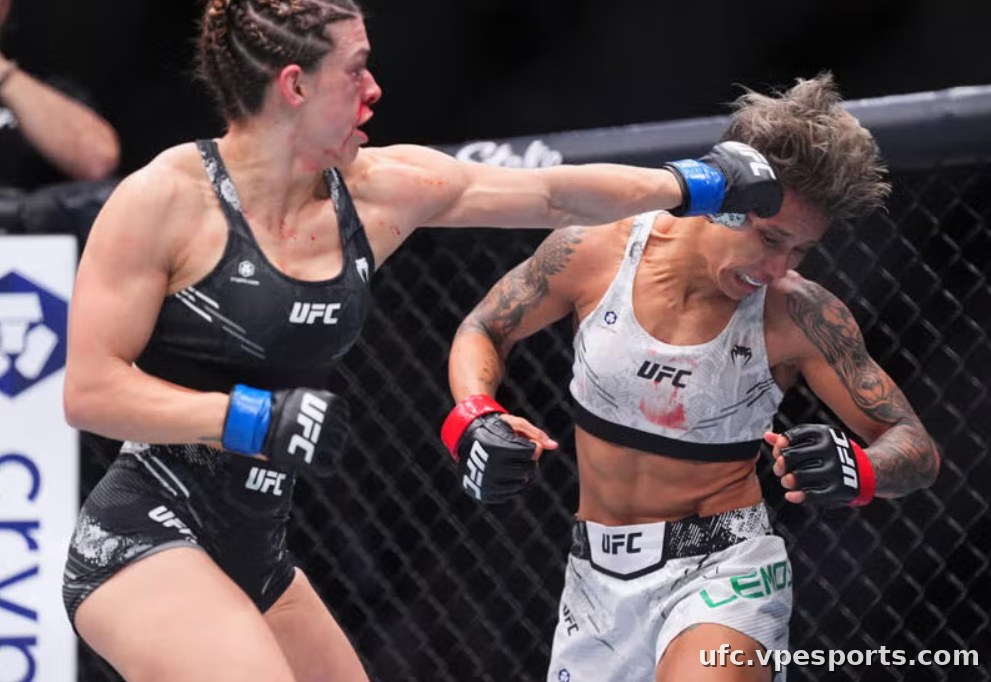
Mackenzie Dern rise in UFC
When she got to the UFC in 2018, the attention was already there. Her debut against Ashley Yoder was not a quiet introduction. People wanted to see if the famous jiu-jitsu star would instantly look like a contender or if the MMA game was going to slow her down first. She won, but the fight also showed what the next chapter of her life was going to be. Nothing would come easy just because her ground game was elite. She would have to build the rest of the sport piece by piece.
Then came one of the first big problems of her UFC career. The Amanda Cooper fight should have been remembered simply as another win. Instead, the weight miss swallowed part of the story. Dern came in seven pounds over the limit. That is huge for strawweight. Too huge to brush aside. It cost her money and created real doubt around how serious her long-term future at 115 would be. In the cage she won by submission. Outside it, the fight left one of the first real stains on her UFC run. That matters because career stories are not built only from wins and losses. They are also built from the moments when a fighter gives people a reason to doubt the structure around the talent.
And to her credit, she had to live with that. A lot of fighters would have hidden behind excuses or acted like the criticism was unfair. Dern had to keep going and prove that the career was bigger than that ugly moment. Then life changed in another huge way. She became a mother. That is not a small side note in her career. It changed her body, her schedule, her priorities and the emotional shape of her life.
Fighters often talk about becoming parents as if it automatically makes them stronger. Real life is not always that clean. Sometimes it helps. Sometimes it complicates everything. Sometimes it does both at once. For Dern, motherhood became part of the toughness of her career story. She had to return to the cage not only as a contender trying to improve, but as a new mother trying to balance recovery, training and all the normal chaos that comes with a life suddenly becoming much bigger than your own ambitions.
That return did not go smoothly. Amanda Ribas beat her, and that loss stung because it came at exactly the stage where Dern needed a clean restart. Ribas looked sharper, freer and more complete that night. Dern had to take that loss honestly. It was not enough anymore to just be “the jiu-jitsu ace.” If she wanted a real UFC run, she had to become a much better mixed martial artist.
To her credit again, that is exactly what happened next. This may be the most important stretch of her whole career. Not because it had the biggest names, but because it showed the growth. Hannah Cifers got caught in a kneebar, and it was not just another submission win. It became the first leg-lock finish by a woman in UFC history. Then came Randa Markos, another quick submission. Then Virna Jandiroba, Nina Nunes, and more signs that Dern was becoming a much more serious strawweight than the early version of her career suggested.

She was still not a polished striker, and she did not need to pretend to be one. The important thing was that she was becoming harder to hit cleanly, calmer under pressure and much better at forcing opponents to fight with the threat of the ground in their minds every second. That changes everything in MMA. Once a fighter has to think about the submission in every exchange, the striking often gets easier too because hesitation starts doing part of the work for you.
The Marina Rodriguez fight was huge because it showed both the promise and the gap. Dern had moments. She had danger. She had pressure. But Marina was cleaner on the feet and sharper over the long shape of the fight. Dern lost, and it was the kind of loss that told the truth without burying her. She was close enough to matter. Not complete enough to own the top yet.
Then came Tecia Torres. Then Yan Xiaonan. Then Angela Hill. Then Jessica Andrade. Then Amanda Lemos. The list matters because it shows how real her level became. Dern was no longer hovering near the rankings on hype and old jiu-jitsu fame. She was in real strawweight fights against women who could box, move, wrestle and punish mistakes. Some nights she won. Some nights she lost. But the division had to keep dealing with her.
Dern biggest fights
If you want to understand Mackenzie Dern’s UFC career, the biggest fights tell the story very clearly. Amanda Cooper was the first early warning that talent alone was not enough if the professional side got sloppy. Amanda Ribas was the first harsh reminder that motherhood and fame did not erase the need for technical growth. Marina Rodriguez was the fight that showed she could not build a title run on grappling threat alone. Angela Hill was important because Dern looked strong, composed and physically imposing over five rounds, which gave her career a steadier feeling again. Amanda Ribas in the rematch mattered because it felt like old pain coming back around, and Dern finishing that fight with an armbar gave her one of the most satisfying wins of her career.
There is something else about Dern that makes her career interesting. She is not just a fighter. She is also one of those personalities who always bring an extra layer of public attention with them. Her look, her voice, the way she switches between English and Portuguese, the fact that she was born in the United States but is deeply tied to Brazil, all of that has followed her for years. Sometimes it helped her. Sometimes it made people take her less seriously than they should have. But she kept going until the sport had no choice but to treat her as more than a famous grappler with a recognizable name.
And the truth is that she has had to fight through more disrespect than people remember. Not outright hatred. Something quieter. The kind of doubt that follows women fighters whose story is too easy to simplify. Pretty girl. Famous BJJ family. Good on the mat. Maybe not complete enough. Maybe not disciplined enough. Maybe not built for the grind of a hard title race. Careers like hers become interesting because they force people to update their opinions little by little. Dern has done that for years now.
| Career stage | What it changed |
|---|---|
| BJJ rise | Made her one of the best grapplers in the world before MMA fully began |
| UFC debut years | Brought hype, early wins and the first major warning signs about weight and structure |
| Motherhood and return | Changed her life and forced her to rebuild the MMA side of her career |
| Middle UFC run | Turned her from a specialist into a serious strawweight contender |
| Recent years | Kept her close to the title picture through growth, setbacks and important wins |
Her money today reflects that she turned all of this into a real career, but it is important to stay honest here. UFC pay is not fully public, and a lot of “net worth” numbers online are half-guesswork. The safest way to say it is this: Mackenzie Dern has done well. Public estimates usually place her around the low seven figures, somewhere in the rough $1 million to $2 million range. That likely comes from fight purses, sponsorships, media value and the fact that she has remained a visible name for years. But nobody outside her team knows the exact number, so it is better to treat that as a reasonable estimate, not a fact carved in stone.

Mackenzie Dern after the setbacks
The best thing about Dern’s career is that it never became one clean easy story. Easy stories are often boring. Hers has texture. She grew up in gyms and on planes, moving between countries and languages. She became world class before most fighters have even found one real skill. She entered the UFC with hype. She made mistakes. She became a mother. She lost important fights. She improved. She came back. She stayed relevant.
That is a real fighter’s life. Not smooth. Not perfect. Real. There are still things she has not fully solved. She can still be hit too cleanly. She can still have nights where the striking gap gets a little too wide for comfort. But there are also very few women in her division who can ever feel safe when she gets a real hold of the fight. That kind of danger keeps a career alive even through setbacks.
- Dern grew up inside high-level jiu-jitsu, not outside it looking in.
- Her early UFC run had both hype and real problems.
- Motherhood became a hard but important part of her story.
- She stayed in the strawweight picture because she kept improving instead of leaning only on old BJJ fame.
And that is probably the fairest way to look at Mackenzie Dern now. She is not just the famous grappling champion who tried MMA. She is not just a contender who had a few big nights. She is a real strawweight force with a messy, interesting, very human career. The career still feels open too, which is important. Some fighters become easy to summarize too early. Dern is not there yet. There is still movement in her story. Still room for another run. Still room for another painful setback too. That uncertainty is part of what keeps her interesting.
When people remember her career years from now, they should remember the titles on the grappling mats, yes. They should remember the family, the early pressure, the weight miss, the motherhood chapter, the kneebar, the armbar, the fights where she looked close to breaking through and the nights where the sport pushed back hard. That full picture is much more honest than any simple version. Mackenzie Dern’s career has been built in public, through talent, mistakes, stubbornness and growth. That is why it still feels alive.



Fight Talk
Share your take on this story
Start the Conversation
Be the first to share your take. Discuss the fight, reactions, and predictions with other fans.