

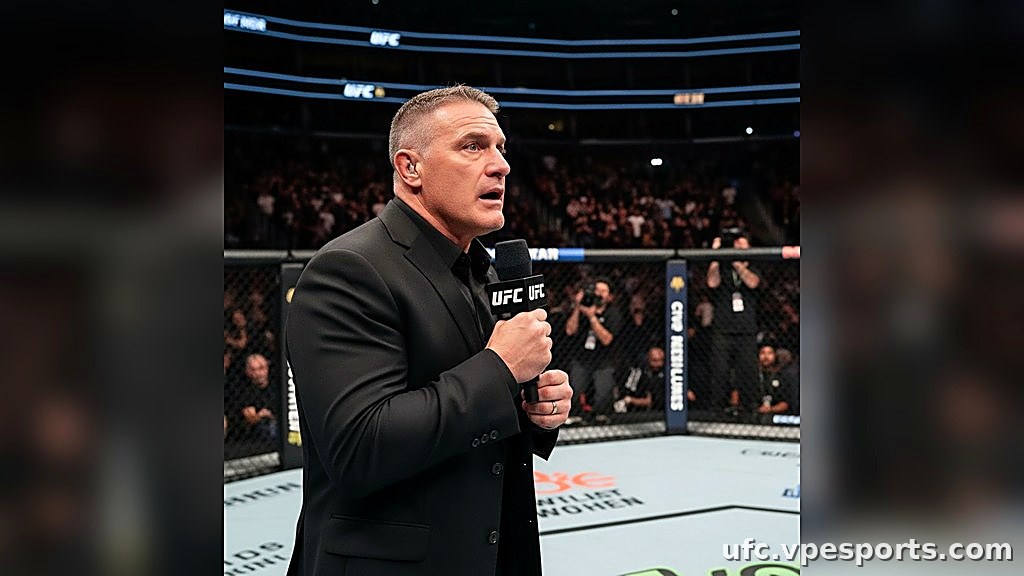
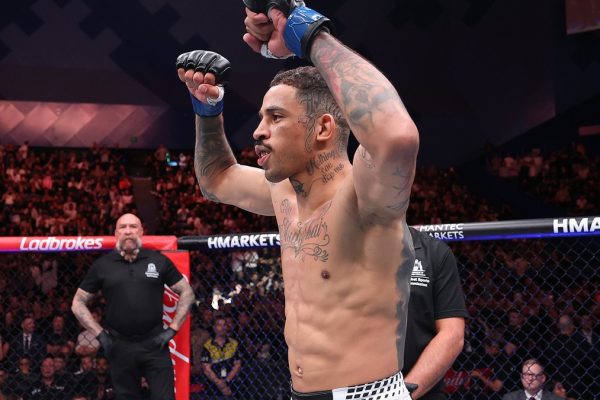
Luke Riley left UFC 329 with another stoppage victory and an argument that continued after the result was recorded. Referee Kerry Hatley intervened while Kai Kamaka III remained upright against the fence, prompting criticism from viewers and fighters. Rogan, working on commentary, also questioned the timing. Riley’s response was unambiguous: he believes the intervention prevented additional damage rather than denying Kamaka a chance to recover.
The disagreement rests on a narrow sequence in the opening round. Riley had Kamaka trapped at the cage and was landing repeated strikes. Kamaka had not fallen, but his reactions appeared impaired, including after Hatley stepped between them. That combination created two readings of the same moment. Critics focused on a standing fighter and the absence of a knockdown; Riley focused on the unanswered attack and his expectation if the action had continued.
Why Riley rejects the early-stoppage claim
Riley learned at the post-fight media session that Rogan had questioned the call. He reacted with surprise and argued that a few additional seconds would have put Kamaka on the canvas. In Riley’s version, Hatley did not rescue a competitive position. He protected an opponent who was hurt, cornered and unable to reverse the exchange before the referee made his judgment.
The official result remains a knockout in round one, and Riley did not distance himself from the controversy. He directly challenged the idea that the bout needed to continue. At the same time, the available footage and reports preserve the reason people debated it: Kamaka stayed on his feet through the stoppage and was never dropped by the finishing combination. Both details can be true without changing Hatley’s recorded decision.
Riley also used the discussion to revisit his own performance. His previous appearance against Michael Aswell ended in a unanimous decision, a result he associated with competing too tensely. Against Kamaka, Riley felt looser and trusted his power. The outcome restored the kind of ending that has defined much of his unbeaten record: strikes account for ten finishes among Riley’s fourteen professional wins. He went further by declaring himself the hardest puncher in the division, a claim that belongs to Riley rather than an independently measured fact.
The result and the debate must be separated
Kamaka’s history adds perspective without resolving the officiating question. Across 27 professional appearances, he had lost by knockout only twice before UFC 329; this was also his first defeat by strikes since a prior UFC run in 2020. Riley can reasonably point to that durability when describing the force of his attack. It does not, by itself, prove precisely how Kamaka would have responded if Hatley had waited.
Refereeing decisions happen in real time and are assessed through the safety of the athlete receiving damage. Riley judged the ending from the position of the fighter throwing the punches. Rogan and the online critics judged whether Kamaka had demonstrated enough defense to continue. The disagreement is therefore about the timing of intervention, not about whether Riley had seized control of the exchange.
- Hatley stopped the contest during Riley’s first-round attack along the fence.
- Kamaka remained standing, which became the central point for critics of the call.
- Riley argued that allowing the exchange to continue would only have added damage.
- The win kept Riley unbeaten and raised his strike-finish total to ten across fourteen victories.
| Point of debate | Confirmed information |
|---|---|
| Kamaka’s position | He was upright against the cage when Hatley intervened |
| Riley’s offense | A sustained striking sequence preceded the stoppage |
| Official outcome | Riley received a knockout victory in the opening round |
Riley does not need the controversy to disappear for the victory to stand, and his defense of Hatley is now part of the UFC 329 story. The strongest account preserves the disputed detail instead of choosing a convenient version: Kamaka was upright, visibly affected and under attack. Hatley decided that was enough. Riley believes any delay would only have changed how badly the sequence ended.
Fight Talk
Share your take on this story
Start the Conversation
Be the first to share your take. Discuss the fight, reactions, and predictions with other fans.