

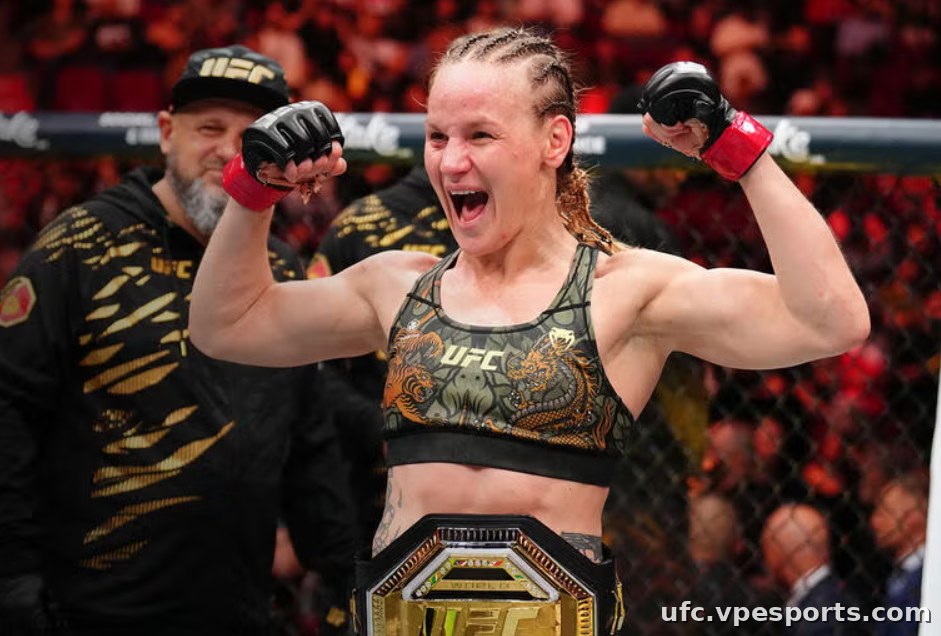
Valentina Shevchenko never felt like a fighter who was still becoming herself in public. From the moment a wider audience really started paying attention, she already carried the finished calm of someone who had lived inside combat for too long to need anybody’s approval. That is one of the first things people remember about her. Not only the technique. Not only the wins. The calm. The way she could walk into a title fight, into a hostile building, into a rivalry full of tension, and still look as if she had already accepted every possible version of the night before the walkout music even started.
That kind of presence rarely appears out of nowhere. It usually comes from a long life around fighting, and Shevchenko had exactly that. She was born in Kyrgyzstan, raised in a family where martial arts were not some hobby squeezed in around ordinary life but part of the atmosphere that shaped ordinary life itself. Her mother was deeply involved in martial arts. Her older sister Antonina was on the same path. Training was not an adventure she discovered late. It was part of the rhythm of home, part of the way discipline and ambition were taught, and part of the reason she grew into competition without ever looking intimidated by the weight of it.
Before the UFC ever saw her, she had already built the kind of striking résumé that would make most athletes feel finished by itself. Muay Thai. Kickboxing. World championships. Years of learning how to control distance, punish mistakes, and stay composed while the other person in front of you tries to speed everything up. That matters when you watch her later MMA career, because Shevchenko never strikes like someone who simply enjoys exchanging. She strikes like someone who understands that every movement has a cost, and if you can make the other person pay a higher price for every mistake than they make you pay for yours, the whole fight starts leaning your way without much noise.
She was not only winning on those early circuits. She was hardening. That is a different thing. A long striking career can make someone flashy, but it can also make them deeply practical if they are smart enough to keep learning instead of only collecting trophies. Shevchenko became that second kind of fighter. She learned when to pressure and when to wait. When to explode and when to let the other woman fall into emptiness. When to stay cold enough that panic never enters the body even if the fight itself gets messy.
That base gave her one of the strongest starting points any future women’s MMA champion could have. But it did not mean the MMA path was easy. It almost never is for even the best strikers. The transition asks different questions. Can you defend takedowns without losing the striking rhythm. Can you grapple under real pressure without turning tense and slow. Can you make your old skills live inside a sport that punishes narrow comfort immediately. Shevchenko had to answer all of that, and she did it in the same way she handled everything else in her career. Methodically. Without dramatics. Without pretending one bad moment meant the project itself was wrong.
Her early MMA years were exactly what serious development is supposed to look like. Not perfect. Useful. She won. She learned. She fought in different countries, different settings, against women who were not there to help her become a future star. She took losses too. That matters. The loss to Liz Carmouche before the UFC chapter is one of those details people forget once a career becomes polished by championship history, but it belongs in the real story. Great fighters do not only rise through clean victories. They also rise through the uncomfortable nights that force them to build layers they otherwise would never need.
By the time she reached the UFC, Shevchenko did not look like a project. She looked like a problem. The skill was obvious. The calm was obvious. The issue was placement. She entered at bantamweight, which meant the physical road was never going to be simple. There were women in that class with more natural size, more straightforward power, and in some cases an easier fit for the weight. Shevchenko had to work around that. And even in those early UFC fights, you could already see what separated her from most of the field. She did not need a fight to stay friendly in order to stay sharp. She could work in ugly spaces and still make the cleaner reads.
That came through in fights like Sarah Kaufman and Holly Holm. Kaufman was experienced and physically solid. Holm brought elite-level striking credibility of her own and the kind of composure that usually scares people away from long technical exchanges. Shevchenko beat them and in doing so started telling the UFC audience something important about herself. She was not just another decorated striker trying to prove she belonged in MMA. She was already one of the most complete women in the sport.
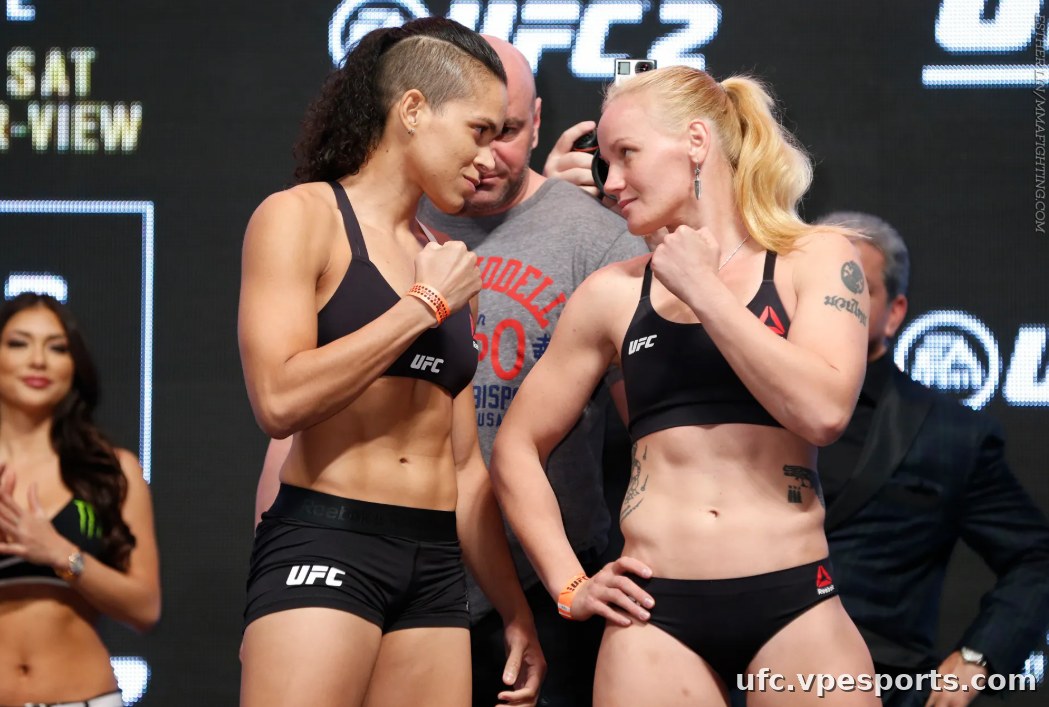
Then came Amanda Nunes, and that rivalry changed the shape of how people would always discuss Valentina Shevchenko. The first fight was at bantamweight, and Nunes won. The second was closer, more technical, more bitter in the arguments afterward. Nunes won again by split decision, but the fight did something valuable for Shevchenko’s career even in defeat. It showed that she could stand in front of one of the most dangerous women the sport had ever seen and make the fight feel like a chess match, not a survival exercise. Plenty of people thought she had done enough in the rematch. Officially she did not get the belt. Unofficially, she had already established herself as one of the very few women alive who could make Amanda Nunes look like she had to solve every minute honestly.
Valentina Shevchenko title rise
The move to flyweight changed everything. Suddenly the body looked more natural, the reactions looked freer, and all the little technical edges Shevchenko already had started breathing better inside the division. Some fighters move down and seem diminished by the process. She looked like a fighter who had finally stepped into the class that fit her entire structure. The footwork got sharper. The timing looked cleaner. The confidence became even more visible because it no longer had to share space with questions about whether she was giving up too much size.
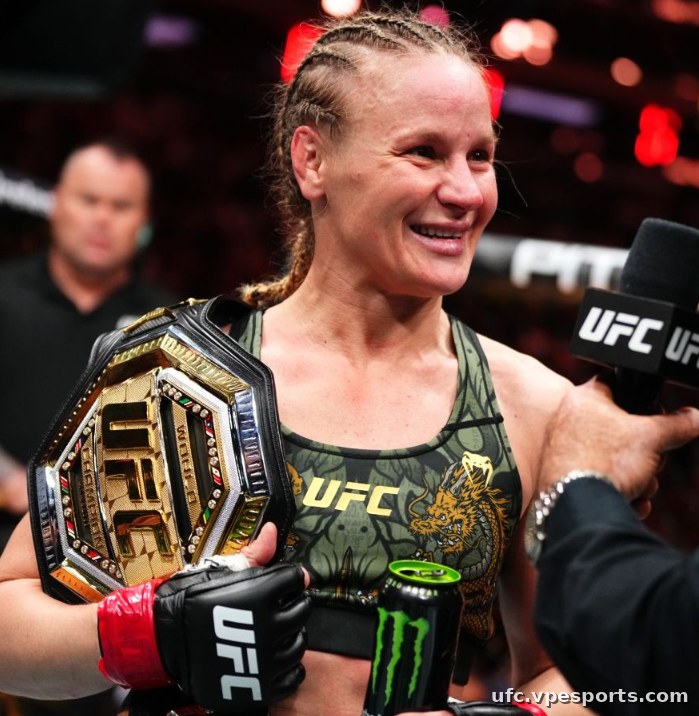
Joanna Jedrzejczyk was waiting in that first title fight at 125, and that made the moment feel even bigger. Joanna was a serious champion-level name, one of the central figures in women’s MMA, and someone who had her own deep striking history. There was real history between them too from their old muay Thai days. Shevchenko beat her over five rounds and took the vacant UFC women’s flyweight title. It was not a lucky finish or a strange one-night result. It was a champion’s performance. Controlled. Measured. Complete enough that by the end of it the belt looked natural around her.
Once she had the title, the run that followed became one of the most defining championship stretches women’s MMA has ever seen. Jessica Eye lasted until the head kick found her. Liz Carmouche got shut down. Katlyn Chookagian could not solve the layers. Jennifer Maia, Jessica Andrade, Lauren Murphy, Taila Santos. Different nights, different tones, same broad conclusion. Shevchenko had become the center of flyweight. You could bring different styles and different reputations to her, but the division still had to pass through her hands before it could move.
What made that reign so impressive was not simply the number of defenses. It was the variety of the control. Against some opponents she looked like a pure sniper, standing just outside the right edge of the danger and touching them with the exact shot they had not prepared for. Against others she wrestled. Against others she clinched. Against others she mixed everything so smoothly that the actual pressure became psychological before it became physical. Women would come in with game plans that made sense. Then the fight would stretch a little, the reads would go wrong, and Shevchenko would start rearranging the terms without visible panic.
Jessica Andrade is one of the clearest examples. Andrade is chaos for a lot of women. She turns clean technical plans into collisions. Shevchenko controlled her, timed her, and submitted her. That is the kind of performance champions need when they want a reign to be remembered as complete rather than simply long. It is not enough to beat people. You have to beat different kinds of danger in ways that feel convincing. Shevchenko did that repeatedly.
Then there were fights like Lauren Murphy and Jessica Eye, which told another truth about her title years. When the gap was real, Shevchenko did not always need to spend five rounds proving it. Sometimes she simply found the opening and ended the night with the kind of finish that reminds people that technique is not the opposite of violence. In her hands, the two were usually living in the same place.
At her best, she made flyweight look as if the division was moving on her schedule. That is what truly dominant champions do. They do not only defend the belt. They set the pace of the whole class. Fans stop asking who deserves a shot and start asking who has any real chance of creating a difficult night. It is a different atmosphere. Shevchenko created it at 125.
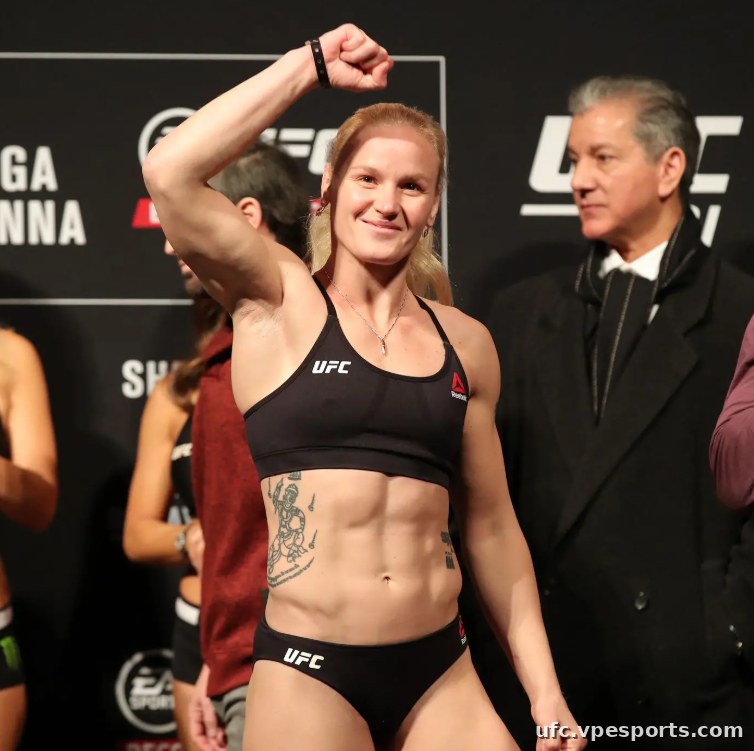
Shevchenko vs Grasso
No long reign gets to stay untouched forever, and Alexa Grasso became the woman who changed the story. That loss at UFC 285 was shocking not because Grasso was fake or undeserving, but because Shevchenko had controlled the division so completely for so long that people had started reading her title reign almost like a permanent condition. Then came the fourth-round back take and the submission. Suddenly the belt was gone, and one of the safest assumptions in women’s MMA had disappeared with it.
The thing about that loss is that it did not feel like the end of Valentina Shevchenko as a top-level fighter. It felt like the end of certainty. That is a different and in some ways more interesting kind of crack. It opened the division again. It reminded people that even the calmest, smartest champions can still lose one read, one transition, one second of control, and watch years of order turn into a completely different future.
The rematch with Grasso ended in a draw, and in a strange way that result fit the moment. It was not clean enough to restore order and not clean enough to bury the old champion. It left Shevchenko in an uncomfortable place. Still elite, still close, still very much in the conversation, but no longer holding the easy authority she had carried for years. The division had changed around her, and the burden now was not only to stay great but to prove she could adapt to being the woman chasing the belt instead of guarding it.
When she eventually reclaimed the title, that mattered because it added something to the career that she did not strictly need for greatness but absolutely needed for fullness. She had already been dominant. She had already ruled the division. What she had not yet done was fall in a truly destabilizing way and build herself back into the champion anyway. That second title chapter gave her that piece. It also told you something about her character that the clean prime years could not fully reveal. She was not just brilliant when in control. She was disciplined enough to rebuild after the order of her career had been disturbed.
| Career chapter | What it gave her |
|---|---|
| Kickboxing and muay Thai years | Built the calm, precise striking base that shaped everything later |
| Bantamweight run in UFC | Proved she belonged with the very best, even before flyweight existed as her true home |
| Flyweight title win | Turned her from elite contender into the central figure of a whole division |
| Long championship reign | Established one of the strongest title stretches in women’s MMA history |
| Grasso setback and return | Added resilience and a second championship chapter to her legacy |
There were other difficulties too, and they matter because no career like hers is actually effortless even when the outside view starts treating it that way. Carrying a title for years means carrying target pressure. Everyone studies you. Everyone prepares for the same details over and over. Everyone builds camps around stopping the exact things you do best. That is mentally exhausting in a way title defenses do not always show. Shevchenko had to keep adjusting under the weight of familiarity. Opponents no longer entered the cage trying to discover her. They entered trying to exploit her routines.
She also spent years dealing with the strange burden of excellence that can become a little too smooth for the public. Greatness is not always loved equally. Some champions feel chaotic and dramatic and are easier for crowds to worship loudly. Shevchenko often felt clinical. She made elite women look ordinary, and after enough of that the audience sometimes stops marveling and starts taking the control for granted. That is an odd challenge, but it is real. Dominance can make a fighter look less dramatic than she actually is, simply because the danger has been managed too well.
Yet if you really look at her best work, there is plenty of color in it. The head kick against Jessica Eye. The patient dismantling of Joanna. The way she solved Andrade. The small traps, the hand fighting, the stance changes, the ability to make women miss and then punish them with almost insulting accuracy. She was not cold because she lacked personality. She was cold because that was the shape her mastery took.
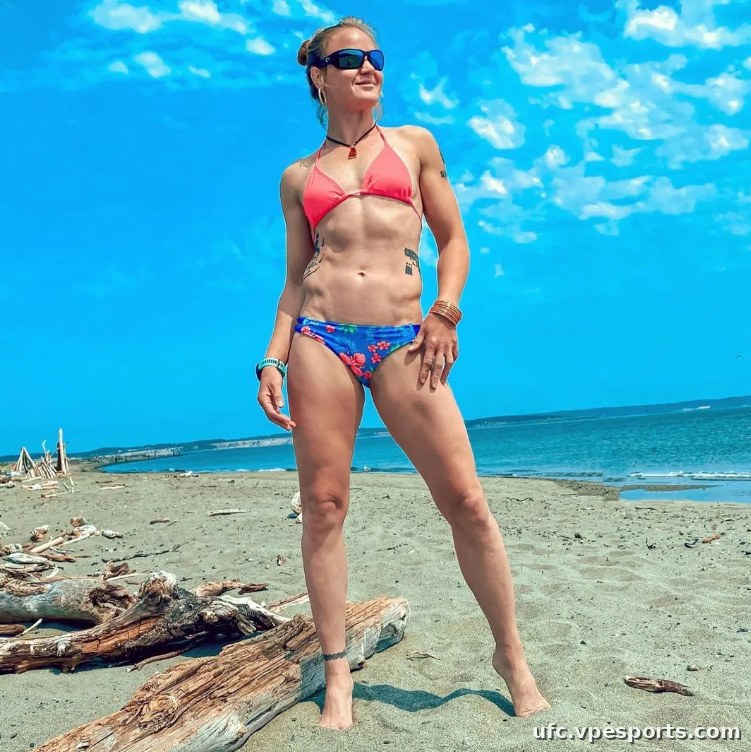
Valentina Shevchenko after the belt
The most human part of her career may be the fact that even after all the titles and all the defenses, she never really stopped carrying herself like a working fighter rather than a protected star. There is no softness in her professional image. She still trains like someone who expects the next fight to ask new questions. She still speaks with the seriousness of a woman who knows that belts do not protect anyone from rounds, damage or decline once the cage closes. That mentality probably explains why her career has aged so well. She never behaved like the reign was enough on its own.
And the later stage of her story is stronger because it resisted easy endings. A lot of champions get one simple final chapter. They either fade, or they retire near the top and become myth while everybody pretends the hard years never happened. Shevchenko’s story is richer than that. She ruled. She got surprised. She adjusted. She came back. She did not let one bad night rewrite the whole architecture of who she had been. That is one of the cleanest signs of a truly great champion. Greatness is not only how long you stay on top. It is also what remains when the top is taken away from you for a while.
- Shevchenko came into MMA with one of the deepest striking backgrounds in women’s combat sports.
- She proved herself at bantamweight before ever fully becoming the flyweight champion people remember.
- Her title reign at 125 was built on control, variety and repeated technical solutions against different styles.
- The Grasso rivalry gave her career a painful but necessary second chapter built on recovery and response.
There is also the larger historical point. Valentina Shevchenko helped define what the women’s flyweight division became in the UFC. Not just by holding the belt, but by giving the class a standard. If you wanted to be taken seriously at 125, sooner or later you had to answer the same question. What do you do when the woman across from you sees the range better than you do, manages the pace better than you do, and stays calmer than you do even when the danger spikes? For years, very few women had a real answer.
That is why her career deserves to be described as more than a reign or a record count. It is the career of a fighter who came in with a deep combat life already behind her, sharpened that life into one of the best women’s MMA runs ever, then survived the moment where certainty broke and still found her way back to the title. Some champions are remembered for one perfect stretch. Shevchenko should be remembered for the full shape. The discipline before the belt. The command with the belt. The response after losing it. That full curve is what makes the career complete.
The calm was already there. The seriousness was already there. The sense that she belonged in major fights was already there. The belt just confirmed what the body and mind had been showing for years. And when the belt left for a while, she did not become someone else. She stayed the same woman, kept working, and built the road back through the same qualities that had made her dangerous from the start.
That is a rare kind of career. Not because it is flashy every minute. Because it is so complete. Hard upbringing. Deep striking base. Global combat experience. UFC contender years against the biggest women in the sport. A title reign that made a division feel smaller around her. A shock defeat. A painful rivalry. A return to the top. There is enough in that story to make her one of the defining women fighters of her era even without the title count. With it, the case becomes even stronger.

Fight Talk
Share your take on this story
Start the Conversation
Be the first to share your take. Discuss the fight, reactions, and predictions with other fans.