

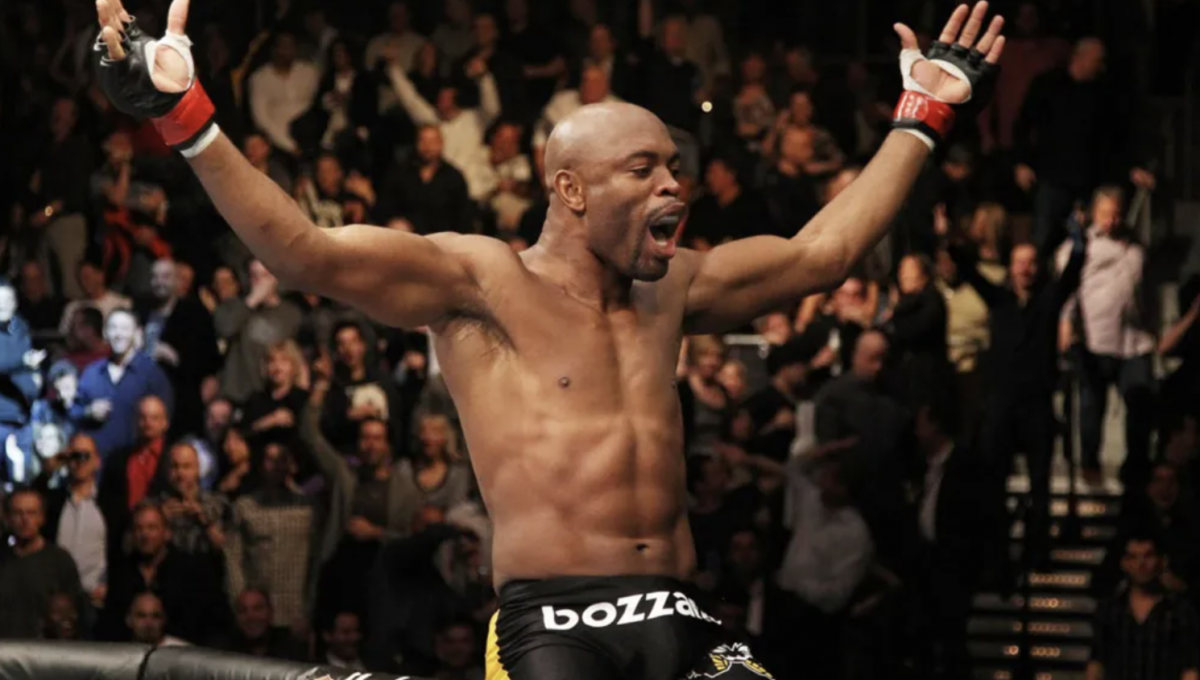
Anderson Silva did not arrive in the UFC as some polished miracle built in a laboratory for highlights. He came from a much rougher kind of road, the kind that leaves marks on a fighter long before the first belt ever touches his waist. He was born in São Paulo, spent part of his childhood away from stability, grew up with very little, and found his way through martial arts in a country where talent alone does not carry you anywhere unless you are willing to keep moving through hard years that most people never see. Before the money, before the title defenses, before the front kick that froze an arena, Silva had already lived a life full of small humiliations, ordinary work, and the kind of uncertainty that forces a person to either bend or harden. He worked regular jobs before the fame came. He learned early that no one was going to hand him an easier version of the road. That reality stayed in him even when the fame got bigger and the aura around him started to feel almost unreal.
What made Silva different was not just that he won. Lots of fighters win. Lots of fighters even become champions. What made him different was the feeling he created when he fought well. There was a strange quiet around his best performances, even when thousands of people were screaming. Opponents would start out with the usual ideas. Pressure him. Crowd him. Test the body. Stay disciplined. Then something would shift. Silva would lean back just enough, slip the shot by a breath, touch the man in front of him with one clean counter, and suddenly the whole fight would feel tilted. He could make elite professionals look as if they had entered the wrong room with the wrong plan and only realized it after the damage had already started. That kind of control does not come from talent alone. It comes from a fighter who spent years learning how fear moves through an opponent’s body and how to meet it with timing instead of panic.
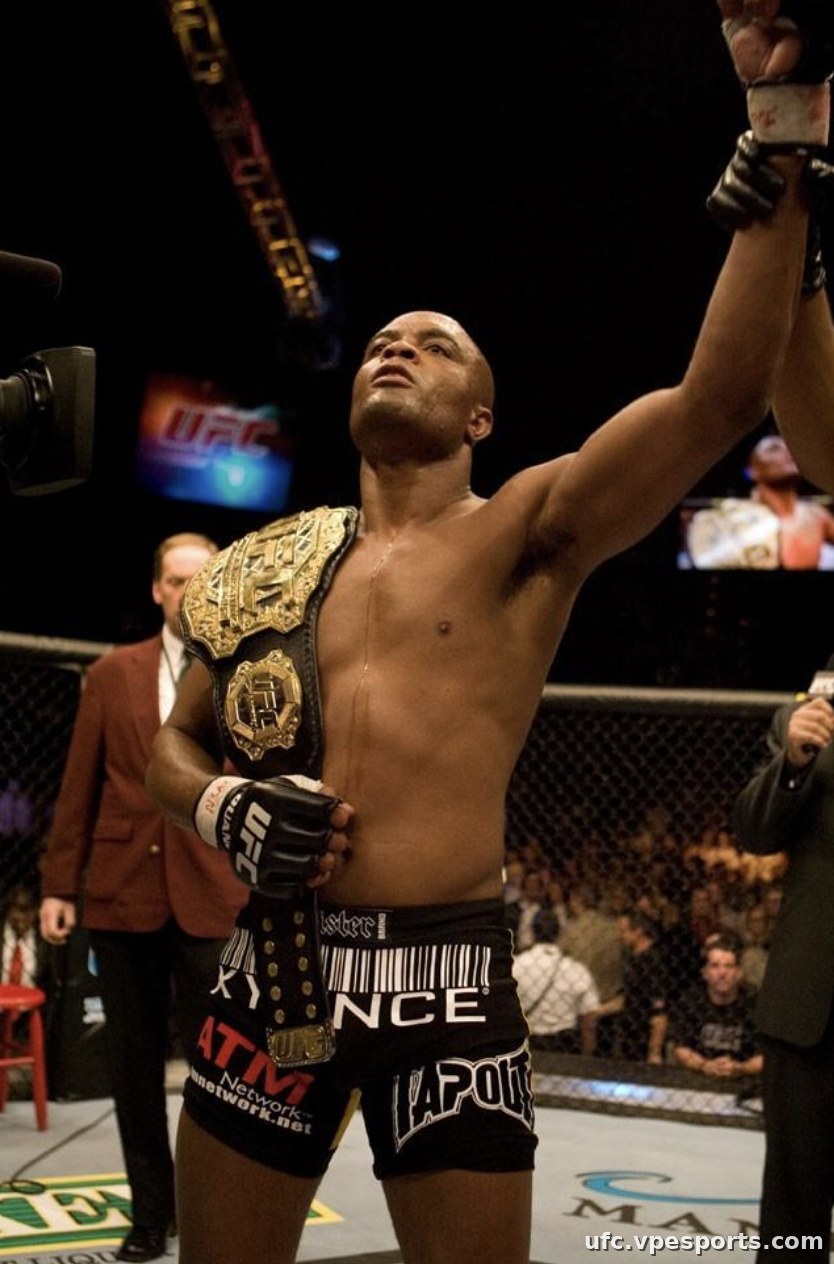
Long before the UFC title run, Silva had already built himself across different stages of the sport. He fought in Brazil. He fought in Japan. He won the Shooto title. He dealt with losses that forced him to rethink how he approached his own game. He changed camps, changed environments, and sharpened his style through that old-school kind of career where a fighter had to prove himself over and over before the biggest American audience even learned his name. By the time the UFC called, he was not some mystery man from nowhere. He was seasoned, dangerous, and carrying that special kind of confidence that comes from already knowing what high-level violence feels like under different lights.
Then came Chris Leben at UFC Fight Night in 2006, and the UFC audience understood almost immediately that this was not going to be a slow introduction. Leben was respected, tough, and exactly the kind of opponent who was supposed to test a new arrival. Silva tore through him in under a minute. He did not look rushed or emotional. He looked almost offended that the fight had taken that long. It was one of those debuts that changes the room right away. Suddenly people were not asking whether he belonged. They were asking how quickly the belt would end up in front of him.
The answer came even faster than most people expected. Rich Franklin was the champion, a real champion, not a paper one. He had credibility, control over the division, and the kind of résumé that should have made a title shot feel like a serious climb. Silva turned it into one of the defining beatdowns in UFC middleweight history. The Muay Thai clinch, the knees, the helpless look on Franklin’s face as Silva kept finding the target, all of it burned itself into the division’s memory. It was not just a title change. It felt like the middleweight class had been handed over to a man who saw fighting differently from everyone else in it.
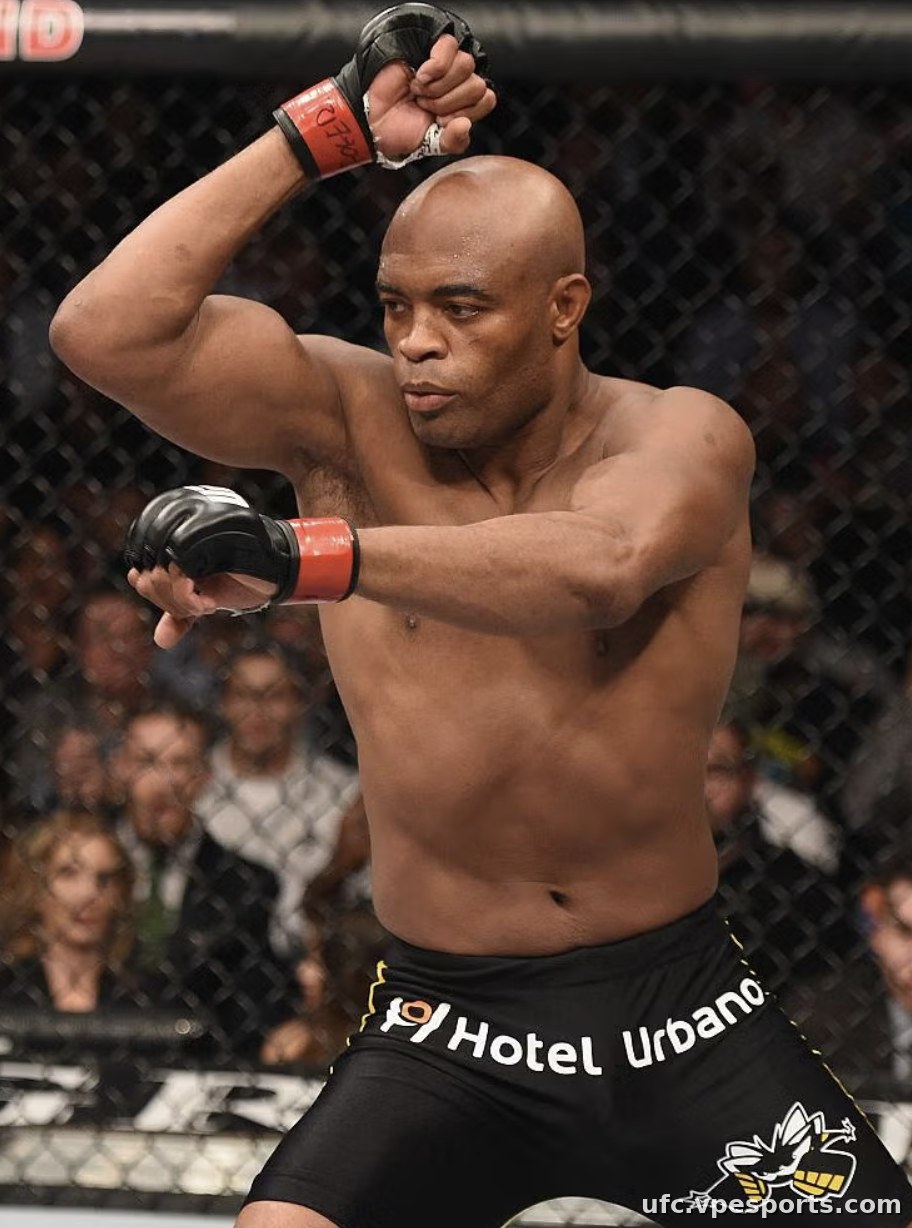
Anderson Silva before the fall
Once Silva had the belt, the title reign became the kind of thing people still use as shorthand when they want to explain what a truly dominant champion looks like. Travis Lutter was supposed to be a dangerous grappling test, and Silva finished him. Nate Marquardt was powerful, athletic and respected, and Silva stopped him in the first round. Rich Franklin got the rematch in his own hometown and still could not solve the same problems. Dan Henderson came in with huge credibility, real physical strength and the kind of right hand that can erase any elegant plan in an instant. Silva lost the first round, stayed calm, then submitted him in the second. Those were not just wins. They were different chapters in the same lesson. You could come after him in different ways, but sooner or later you still had to stand in front of his judgment.
The Forrest Griffin fight at light heavyweight remains one of the strangest and clearest windows into Silva’s peak. Griffin was bigger, durable, proven, and not walking in as sacrificial material. Silva made him look lost. He slipped punches with contemptuous ease, played with the range, and dropped him in one of those knockouts that almost feel disrespectful to the idea of top-level competition. Watching that fight back now, what still stands out is not just the finish. It is the emotional effect Silva had on the man across from him. Griffin looked like he was trying to fight a thing he could not quite measure. That happened to people a lot against Silva.
But the reign was not made only of beautiful violence. There were uncomfortable nights too. Thales Leites. Demian Maia. Fights where the crowd turned on him because the genius tilted too far toward gamesmanship and drift. Those performances matter because they keep the career honest. Silva was not a machine built only for clean mythology. Sometimes he frustrated people deeply. Sometimes he seemed too willing to play with the fight instead of forcing it. Sometimes the same looseness that made him look supernatural also made him look detached from the urgency everyone else expected. That contradiction followed him through his prime. It is part of the real story, and ignoring it makes the run look simpler than it was.
Then there was Chael Sonnen, and that rivalry did more than almost anyone else to prove that even a reign this great can still be dragged into chaos. In the first fight, Sonnen battered him for round after round, wrestled him, controlled him, and for long stretches seemed to be minutes away from taking the title. Silva looked beaten on the cards and physically worn. Then, deep in the fifth round, he found the triangle choke and stole the fight from a man who had spent nearly the entire night forcing him into one of the ugliest experiences of his championship run. That win said something essential about Silva. He was not only a highlight artist. He was also a champion who could stay mentally alive long enough to survive the worst version of the night and still take the fight back when almost everything was gone.
The rematch with Sonnen was different. It carried anger, insult, buildup and the sense that the division needed a cleaner answer. Silva gave it one. The knees came up the middle, the punches followed, and Sonnen collapsed under the storm. In one fight Silva had shown the comeback champion’s nerve. In the other he showed the sharper, more punishing version of himself that could clean up a rivalry and remind everyone who still sat at the center of the weight class.
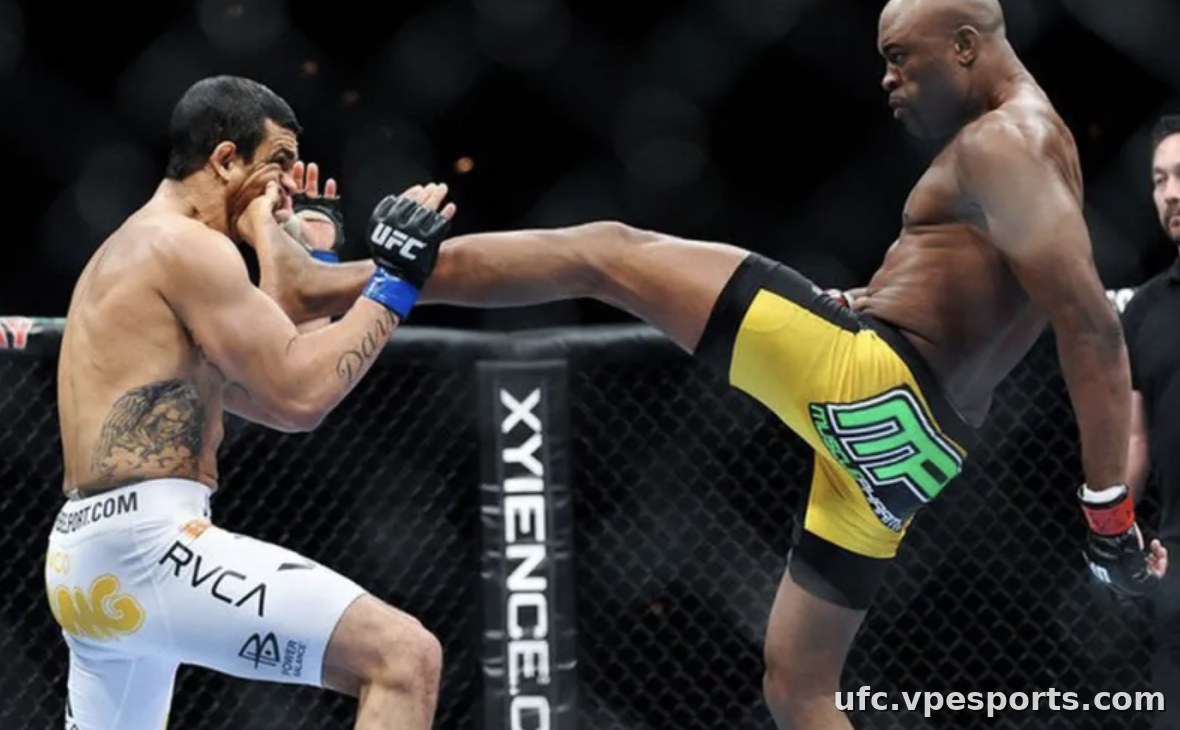
If one finish turned him from champion into legend, it was the front kick against Vitor Belfort. Belfort was fast enough to make anyone nervous, dangerous enough to force a bad exchange, and famous enough that the whole buildup already felt huge. Then Silva lifted the kick into Belfort’s face and ended the fight in one of the most iconic title-finishing moments the UFC has ever had. The kick looked so clean and so sudden that people still replay it not only because it was violent, but because it felt like a perfect example of his brain and body moving together at peak speed. No rush. No wasted motion. Just the exact answer at the exact second.
By the time he beat Yushin Okami and then dealt with Sonnen again, Silva’s reign had become history while it was still happening. Ten successful UFC middleweight title defenses. Eleven wins in UFC title fights. Sixteen straight wins in UFC competition. A title reign measured in years instead of months. Those numbers matter because they prove that the feeling around him was not illusion. He really was that dominant for that long. He really did force an entire division to spend era after era trying to solve one man’s timing. The middleweight belt did not just sit around his waist. For years it looked like it belonged there more naturally than anywhere else in the sport.
| Anderson Silva UFC run | Main fact |
|---|---|
| UFC middleweight title win | Defeated Rich Franklin in 2006 |
| Successful title defenses | 10 |
| UFC title fight wins | 11 |
| UFC win streak | 16 straight wins |
| Longest UFC title reign | 2,457 days at middleweight |
The fights people still remember
When people remember Anderson Silva, they do not only remember that he won. They remember how specific the biggest nights felt. Rich Franklin bent under the clinch and knees. Dan Henderson got caught in the triangle. Forrest Griffin looked as though he had stepped into the wrong kind of fight. Chael Sonnen had victory in his hands until he did not. Vitor Belfort walked into a kick that became immortal the second it landed. These fights are remembered so clearly because each one told a different truth about Silva. He was not one-note. He did not need the same answer every time. He could dismantle a striker, survive a wrestler, embarrass a larger man, finish from his back, or end a title fight with a strike that looked like it had arrived from another sport.
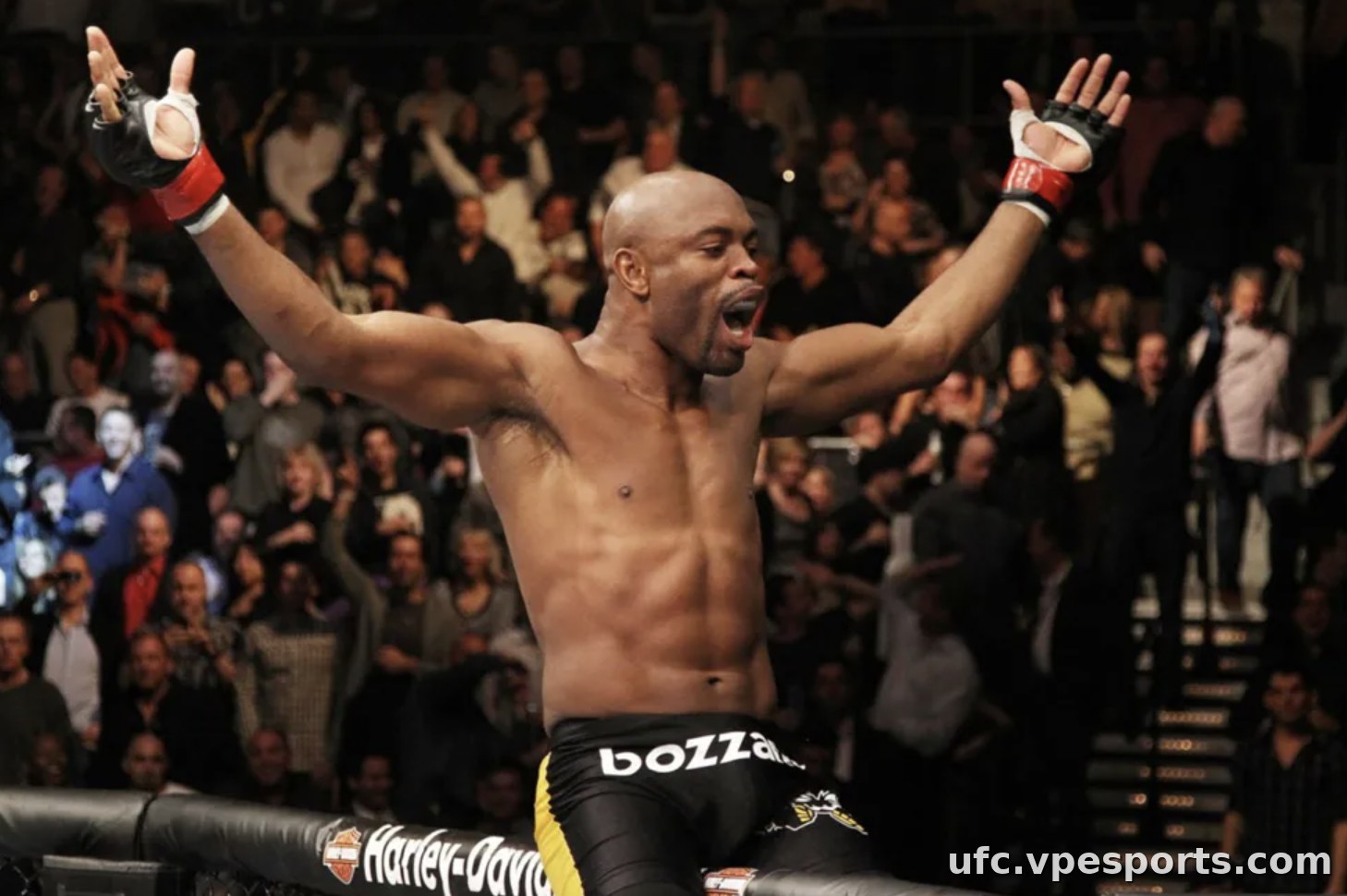
That variety is a huge part of why his prime remains so difficult to challenge in memory. Some champions are remembered for quantity. Some for one or two huge nights. Silva had quantity and unforgettable specifics. His reign had shape. Fans can still describe the emotions of individual fights without even checking the records. They remember disbelief against Franklin, admiration against Henderson, confusion against Griffin, panic and release against Sonnen, and stunned silence against Belfort. That is not normal. Most careers leave behind results. Silva left behind scenes.
He also carried the title in a way that made every opponent feel like a fresh test even when the outcome kept looking familiar. Franklin brought discipline and championship credibility. Henderson brought wrestling and physical danger. Sonnen brought volume and obsession. Belfort brought explosiveness. Okami brought a previous win over him outside the UFC and a style built to slow things down. Silva beat them all under different conditions. That is the real backbone of the reign. Not just that he defended the belt a lot, but that he did it against a wide enough spread of problems that the defense count never felt cheap.
There was another layer to his life during all this that people sometimes forget when they only watch the highlights. Silva was not living in some fantasy bubble. He was a husband, a father, a Brazilian star carrying expectations that stretched far beyond the cage, and eventually a global sports figure learning how to exist inside a level of fame he had not grown up with. He had come from almost nothing, worked ordinary jobs, and then found himself moving through a world where comic-book levels of admiration were suddenly aimed in his direction. That kind of transition can break people or make them strange. In Silva’s case it seemed to deepen the distance between the public myth and the private man. On camera he could look cold, playful, untouchable. In his personal story there was still a man shaped by scarcity, discipline and years spent earning every step.
That is one reason the eventual fall hit the sport so hard. Chris Weidman was young, skilled, unbeaten in the UFC and carrying the exact kind of balanced game that should trouble a champion who leaned so heavily on timing. Still, a lot of people believed the aura would hold. In the first fight Silva played with the line too long, Weidman landed, and the belt was gone. For the first time in nearly seven years, the middleweight title was no longer his. That alone would have been enough to shake the career. But then came the rematch, and with it one of the most horrifying images the sport has ever seen. Silva threw the kick. Weidman checked it. Silva’s leg broke. The fight ended in a way nobody wanted to see, and suddenly a reign that had felt almost supernatural was gone in the most brutally human way possible.
After that, everything changed. Silva came back, but the career after the belt was never going to be the same story. The body had miles now. The myth had been cracked. The opponents were still dangerous, but the role had shifted from ruler to elder. There were hard nights and frustrating nights. The Nick Diaz result was overturned after drug-test issues, which added another complicated layer to a legacy that had once felt much cleaner. He fought Michael Bisping in London and gave him one of the wildest fights of Bisping’s career. He lost to Daniel Cormier on short notice at light heavyweight after taking the fight in a moment that reminded people he still carried old-school courage even as the title chapter had ended. He beat Derek Brunson when many had already started writing him in the past tense. He fought Israel Adesanya in a bout that felt less like a normal rankings contest and more like a conversation between eras.
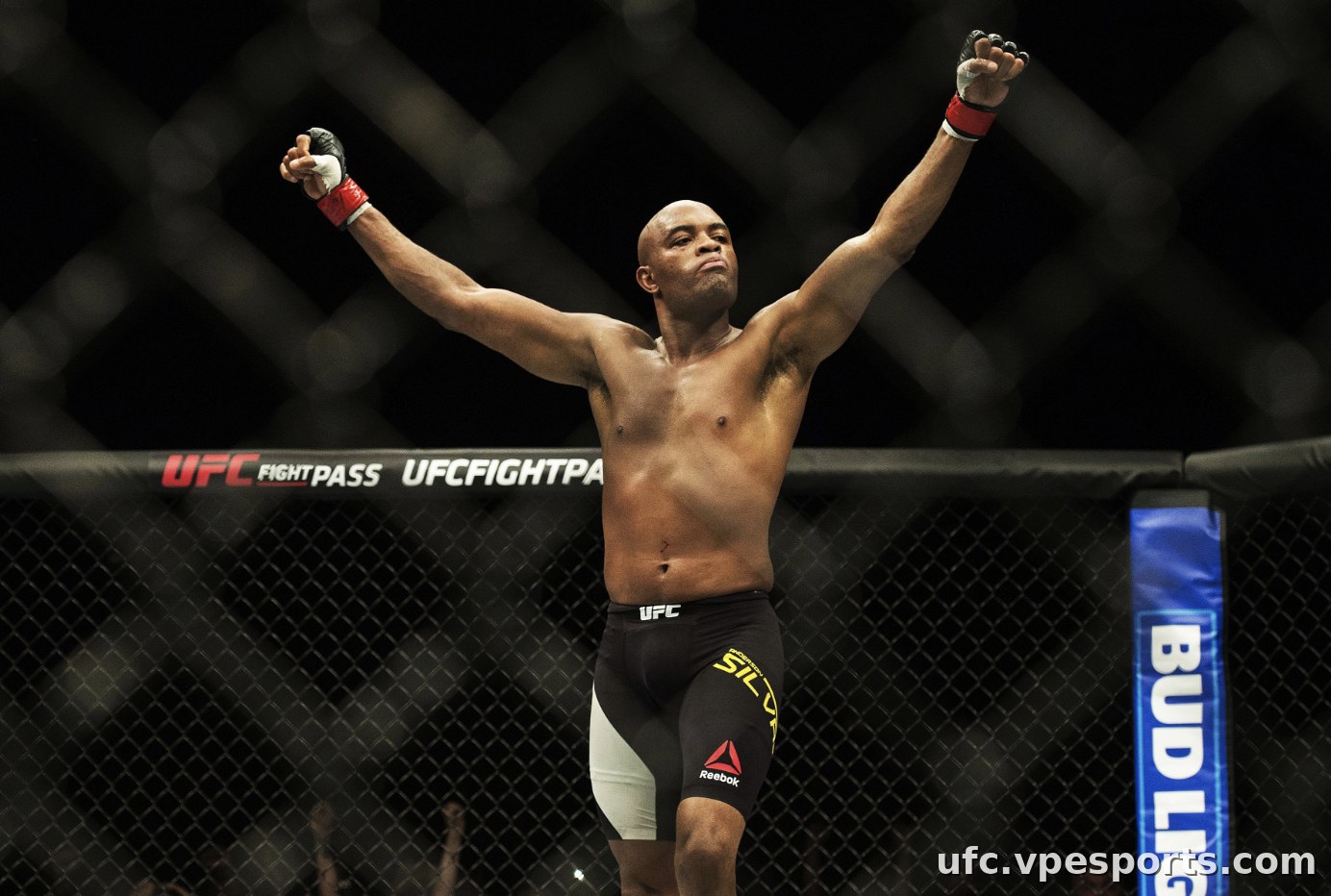
Anderson Silva after the belt
That post-title chapter deserves more care than people often give it. It is easy to skip from peak greatness to decline and leave out everything in between. Silva’s late UFC run had losses, yes, but it also had dignity, stubbornness and enough flashes of the old mind to keep the audience from feeling they were only watching an old champion fade. Against Bisping he still found moments that looked like prime Silva waking up for a second and turning the whole arena inside out. Against Brunson he reminded everyone that experience and timing can still ruin a younger man’s rhythm. Against Adesanya he lost, but he also looked like a respected master standing across from the next elegant ruler of the weight class and forcing him to think.
The Adesanya fight in particular matters because it kept Silva’s story from ending in pure sadness. He was older, slower and no longer carrying the same menace through every exchange. But he was still readable as Anderson Silva. The little traps were there. The balance was there. The sudden counters were there. Adesanya won the fight, but he had to win it against the spirit of a man who had once defined what a middleweight artist could look like. The crowd understood that night for what it was. Not simply a loss by an aging legend, but a final proof that the shape of Silva’s greatness still existed even after the belt and the dominance had moved on.
By the time he left the UFC in 2020, the career had become something bigger than one reign, one record or one perfect version of greatness. It had become the full story of a fighter who climbed from a hard beginning, sharpened himself in different promotions, took over the biggest stage in the sport, held it for years, lost it in unforgettable fashion, and still managed to leave behind more than decline. That matters. Too many legends become footnotes to their own final losses. Silva remained larger than that because the prime had been too immense and the late years still carried too many recognizable pieces of his old self.
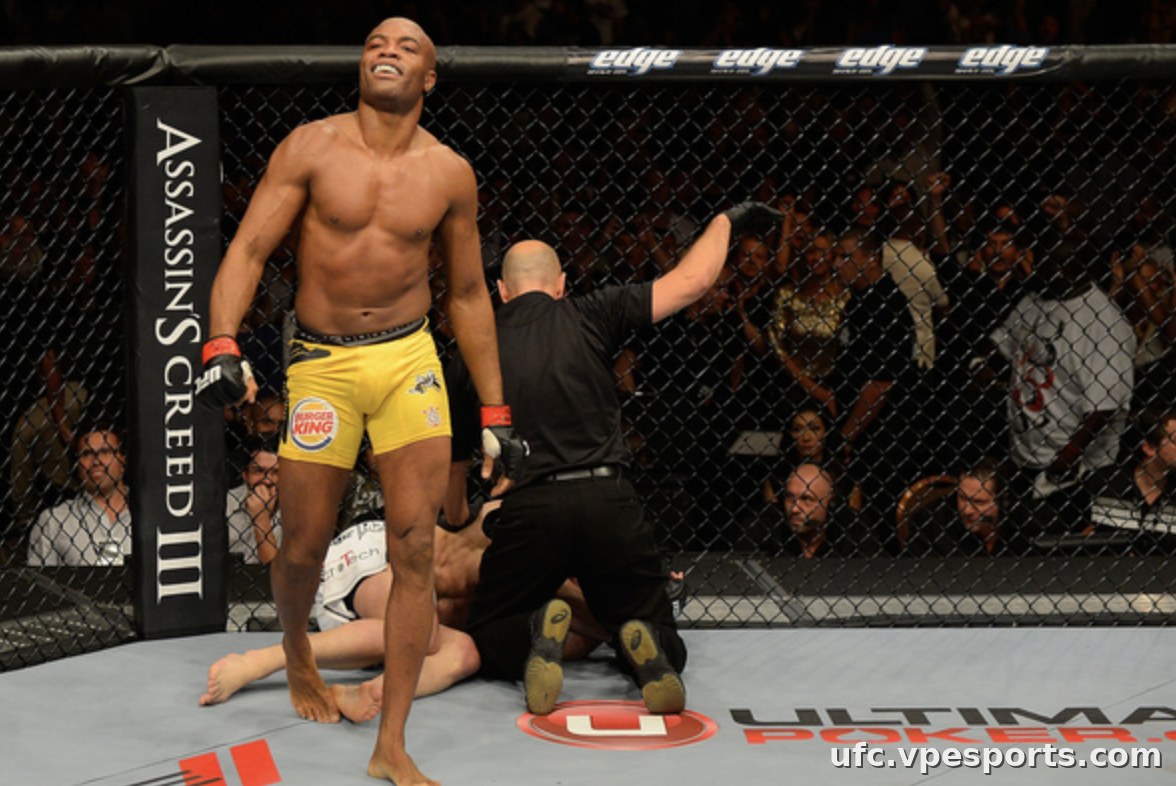
His records continue to hold weight because they were earned across real opposition and in a division that did not hand out easy title nights. The 2,457-day reign still stands as one of the central numbers in UFC history. The 16-fight UFC win streak sat at the top of the company record book for years and remains part of the conversation whenever a dominant champion starts putting a run together. The 11 UFC title-fight wins place him among the greatest championship performers the organization has ever had. These are not decorative statistics. They are structural ones. They tell you how much of UFC history had to pass through him before the middleweight division could move on.
His influence is harder to count but maybe just as important. Silva helped expand what fans expected from elite striking in MMA. He made patience feel violent. He made defensive awareness and counter timing feel as dramatic as raw aggression. He showed future champions that a fighter could carry mystery, control and artistry without becoming soft or passive. He also showed the danger of walking too close to your own myth. The clowning, the drifting, the moments where the performance art nearly swallowed the practical job of winning, all of that became part of the lesson too. Younger fighters took inspiration from the beauty and warnings from the excess.
And that is probably the fairest way to leave his story. Anderson Silva was not a flawless legend carved out to fit a poster. He was more interesting than that. He came from a difficult start. He built himself across years that were not glamorous. He became one of the most gifted champions the UFC has ever seen. He frustrated people at times, amazed them often, broke records, broke expectations, then suffered the kind of fall and physical damage that would have erased lesser legacies. His did not disappear. It stayed because the best of him had already reshaped the division too deeply.
When people say “Anderson Silva” now, they are not just naming a former champion. They are naming a whole feeling from a certain stretch of MMA history. The calm hands low at the waist. The eyes reading distance like a language only he fully understood. The knees, the front kick, the counters, the escapes, the silence before the finish. They are naming a champion who made elite opponents look strangely small and made the middleweight belt feel as if it belonged to one man for so long that the division itself had to relearn how to exist once he was gone.
- Silva came from a hard life in Brazil before building his name across multiple promotions.
- He changed the UFC middleweight division the moment he stopped Rich Franklin for the title.
- His reign mixed dominance, artistry, unpredictability and some of the sport’s most replayed finishes.
- Even after losing the belt, he stayed one of the defining figures in modern MMA history.
Fight Talk
Share your take on this story
Start the Conversation
Be the first to share your take. Discuss the fight, reactions, and predictions with other fans.