

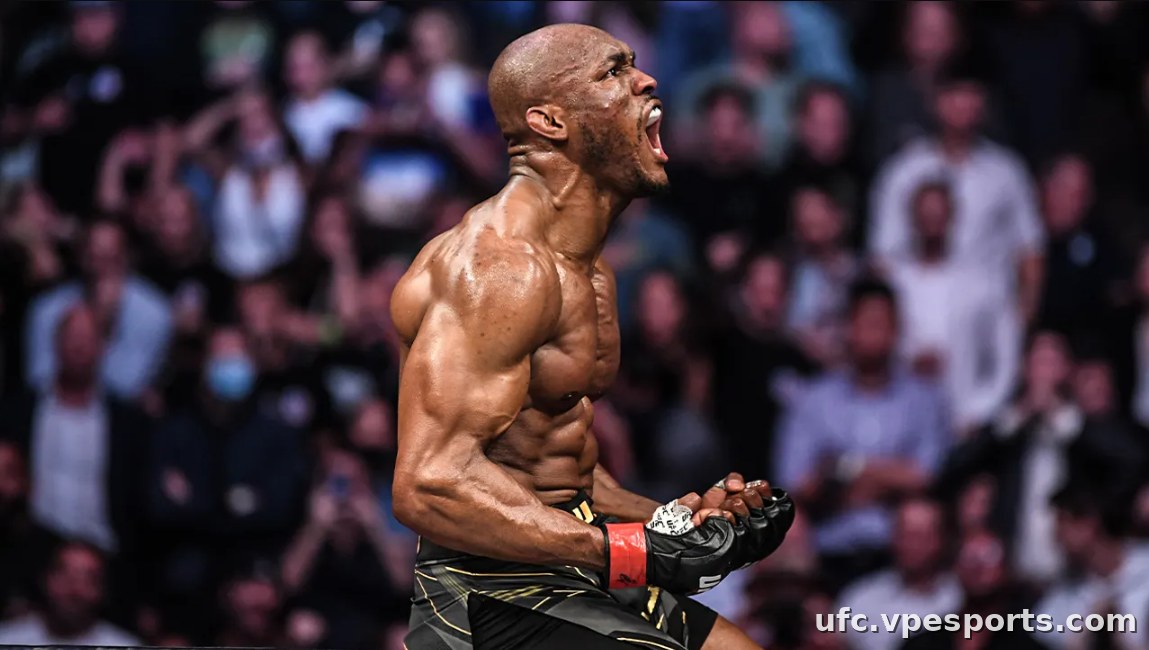
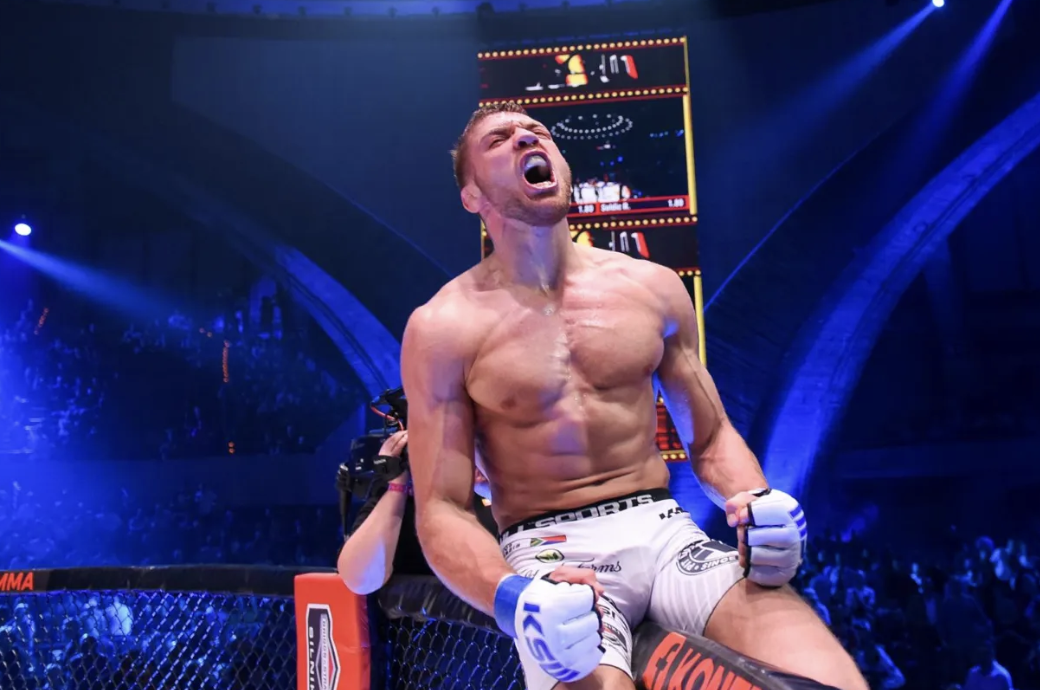
Kamaru Usman’s explanation of his loss to Dricus du Plessis centered on a problem that was not obvious from the scorecards alone. During the second round in Oklahoma City, a blow reached Usman’s eye and disrupted his sight. He said the effect left him dealing with two images of an opponent who already presented unusual range and physical size. Usman offered that detail after a clear unanimous-decision defeat, but repeatedly refused to turn it into an excuse.
The former welterweight champion had moved up for a five-round main event against a former middleweight champion. Across the full 25 minutes, du Plessis repeatedly found him with heavy offense and prevented Usman from establishing the kind of sustained work he wanted. The late portion showed that Usman was still competing: two judges awarded him the fifth round. His post-fight account, however, helps explain why reading and avoiding attacks became more difficult well before that final push.
The moment that changed Usman’s visual picture
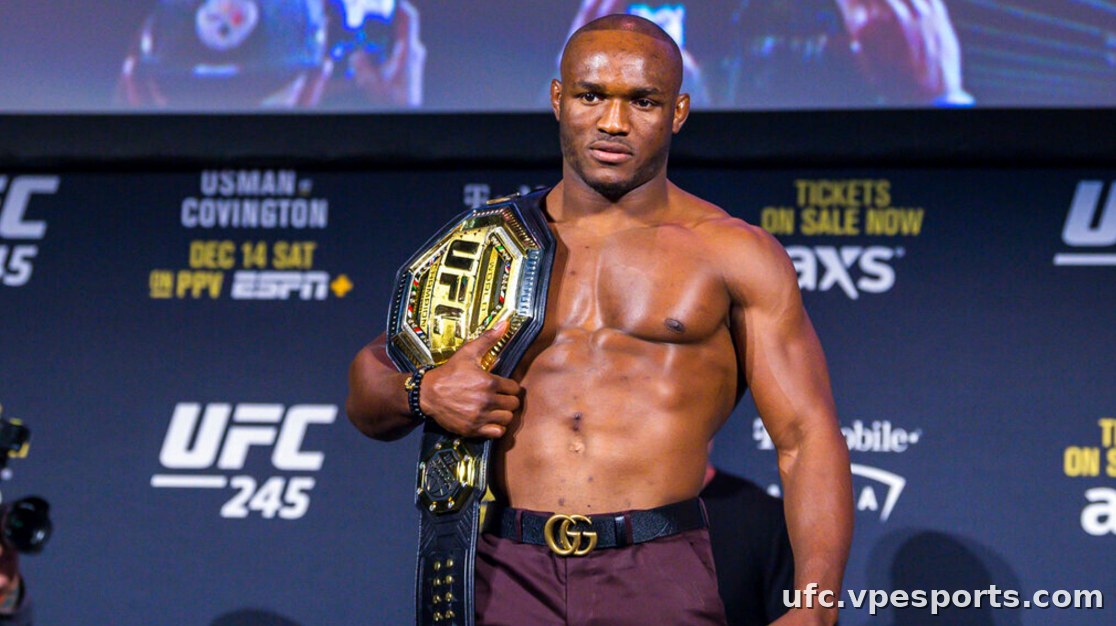
Usman located the critical incident in round two. He described the contact as a punch that also caught the eye with the thumb area. From that point, his vision was blurred, and the task of tracking du Plessis became less reliable. That mattered against an opponent Usman characterized as large, strong and long-limbed. He also noted that du Plessis delivers strikes with an uncommon rhythm, making delayed visual information especially costly.
Nothing in Usman’s comments erased the result or reduced the winner’s role. He acknowledged the physical advantages du Plessis brought and accepted that he had been unable to build momentum. The important editorial line is the one Usman drew himself: the eye problem was part of the fight’s story, not a request to reverse its meaning. Du Plessis completed five rounds and won on every official card.
Usman also referred to an unspecified issue that had affected his preparation or ability to perform as planned. He declined to identify it. His reasoning was that fighters routinely enter contests while managing physical problems, and that his own issues usually receive no attention when he wins. That refusal places a firm limit on the available facts. It is accurate to report that another concern existed; it would be speculation to diagnose it or claim how much it influenced the outcome.
What the defeat leaves open
The Oklahoma City result interrupted Usman’s attempt to re-enter title conversations in two divisions. He had taken the du Plessis assignment at middleweight while retaining the option of competing again at welterweight. After the loss, he did not choose one route. Instead, he said he would remain attentive to significant opportunities, pointing to occasions in his career when short-notice openings changed his schedule.
That approach is consistent with the way he discussed the fight itself. Usman did not announce a retirement, a permanent division change or a specific opponent. He assessed the immediate damage, credited the challenge presented by du Plessis and left the next sporting decision unresolved. Any stronger conclusion would move beyond his public comments.
- The eye contact occurred in the second round and, according to Usman, blurred his vision.
- Du Plessis used his size, reach and unusual delivery to keep Usman from finding a steady rhythm.
- Usman mentioned another pre-fight issue but deliberately withheld its nature.
- He kept both weight classes and future major opportunities open after the defeat.
| Stage of the fight | What is confirmed |
|---|---|
| Second round | Usman said an eye strike interfered with his sight |
| Later rounds | He continued for the full distance and took the fifth on two scorecards |
| Official result | Du Plessis won a unanimous decision after 25 minutes |
Usman’s account adds useful context without changing the official verdict. The vision problem clarifies one obstacle he encountered, while his refusal to disclose the other physical concern prevents responsible reporting from going further. Du Plessis owns the decision victory. Usman, meanwhile, leaves Oklahoma City with recovery and opportunity—not a declared destination—at the center of his next move.
Fight Talk
Share your take on this story
Start the Conversation
Be the first to share your take. Discuss the fight, reactions, and predictions with other fans.